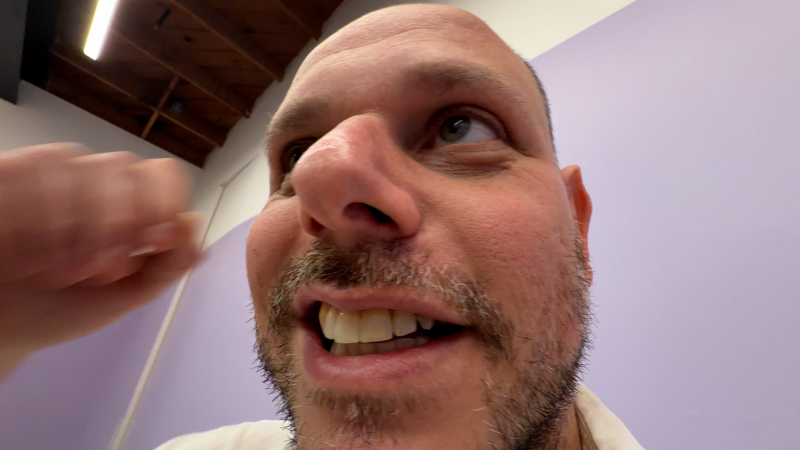
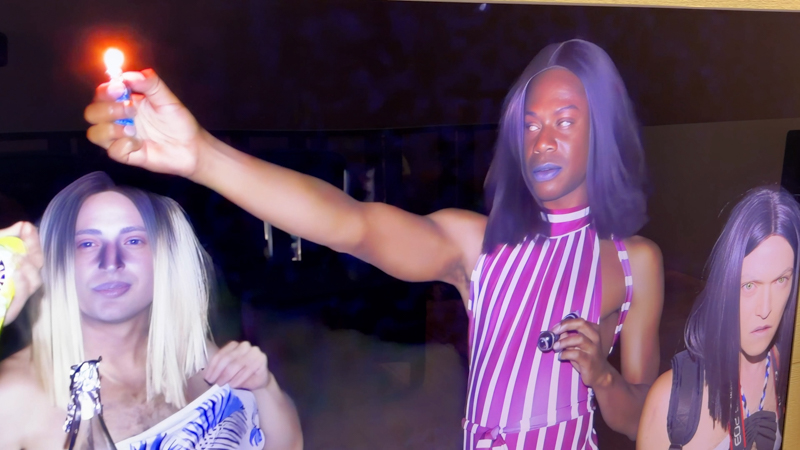
at Morán Morán in Los Angeles
Transcribed review vlog
Eugene Kotlyarenko here, reporting live from the ARCO gas station. Look at these prices. The prices are insane! This is what we get for our forever wars. We’re here at Morán Morán, about to review the new show from Lizzie Fitch and Ryan Trecartin. Let’s go on in. The show is called PLY WOULD.


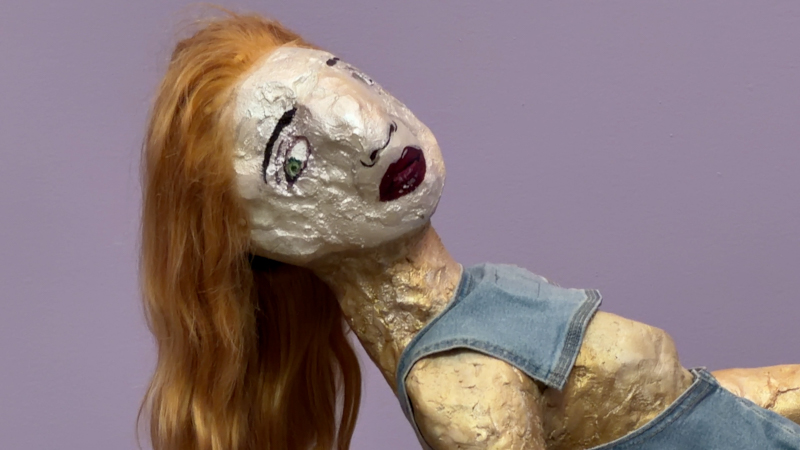

I mean, it’s an amazing installation, let’s just get that out of the way. They’ve built this set with these different sides: like, here’s your deck, and then here’s your living room, right? So let’s just sit in the living room for a second and watch this video. The dialogue in the videos is so funny and so well written, and it’s… I don’t want to say it’s Lynchian, but it has a surrealism to it.
“Scientists have found a way to reverse the signs of aging without lowering your property value.”
It’s that brain slop. Not brain rot, just a slop combination of signifiers that has been prognosticated and predicted in this work for decades now. It becomes more and more apparent every day with our slop-ass lives on the slopper net. We’re in a schizophrenic hyperspeed culture and this is some of the only film and video that kind of moves at that pace. Ryan’s been doing that since the beginning. I think it really captures the speed of the mind, of the time, of the culture.


Ryan and Lizzie’s work has always kind of evolved in parallel with the internet. The internet is this place with zillions of different signifiers all coexisting and getting synthesized in unexpected ways just through one’s browsing. It’s completely about surfaces and superficial behavior. You have to make these surface-level judgments because there’s such a massive volume of stuff there. That’s the kind of thing being broken down in this work: these really quick surface behaviors and judgments, where you can latch onto the absurdity and ridiculousness of these kind of archetypal characters that Ryan comes up with.
I said Lynchian before because there’s also this fascination with American behavior and Americana. I hate to use the term Lynchian, but it’s just, I don’t know, maybe we should call it Fitchian or Trecartian or something like that. Yeah.
Eugene starts filming staff at gallery
Staff: No, no, I don’t like that.
Eugene turns the camera away
Eugene: So this is the intel I got: for the songs, the arrangements and music are made by Ryan, the lyrics are by Ryan, and then the vocals he’s singing are actually processed through AI voice. Is that correct?
Staff: Yup.


Eugene: Haha, I love these credits. Also the way they destabilize what credits even are. Like, ‘okay name’… Like what is that?
Staff: That’s the name of one of their songs…
Eugene: That’s the name of… Ah, there you go. I was also curious about the scripting. How much of the dialogue in the films is scripted, and how much do they come up with on the spot? I just assume it’s some sort of…
Staff: Fully scripted.
Eugene: Is it fully scripted?
Staff: Fully scripted.
Eugene: With a little bit of improvisation thrown in.
Staff: A little bit.
Eugene: That’s fine. Okay, so he’s giving the actors the scripts, they’re reading the scripts, they’re preparing the lines, and then they’re just doing it.
Staff: Yup.
Eugene: Just like a normal movie!
Staff: Yup.
Eugene: Amazing!