
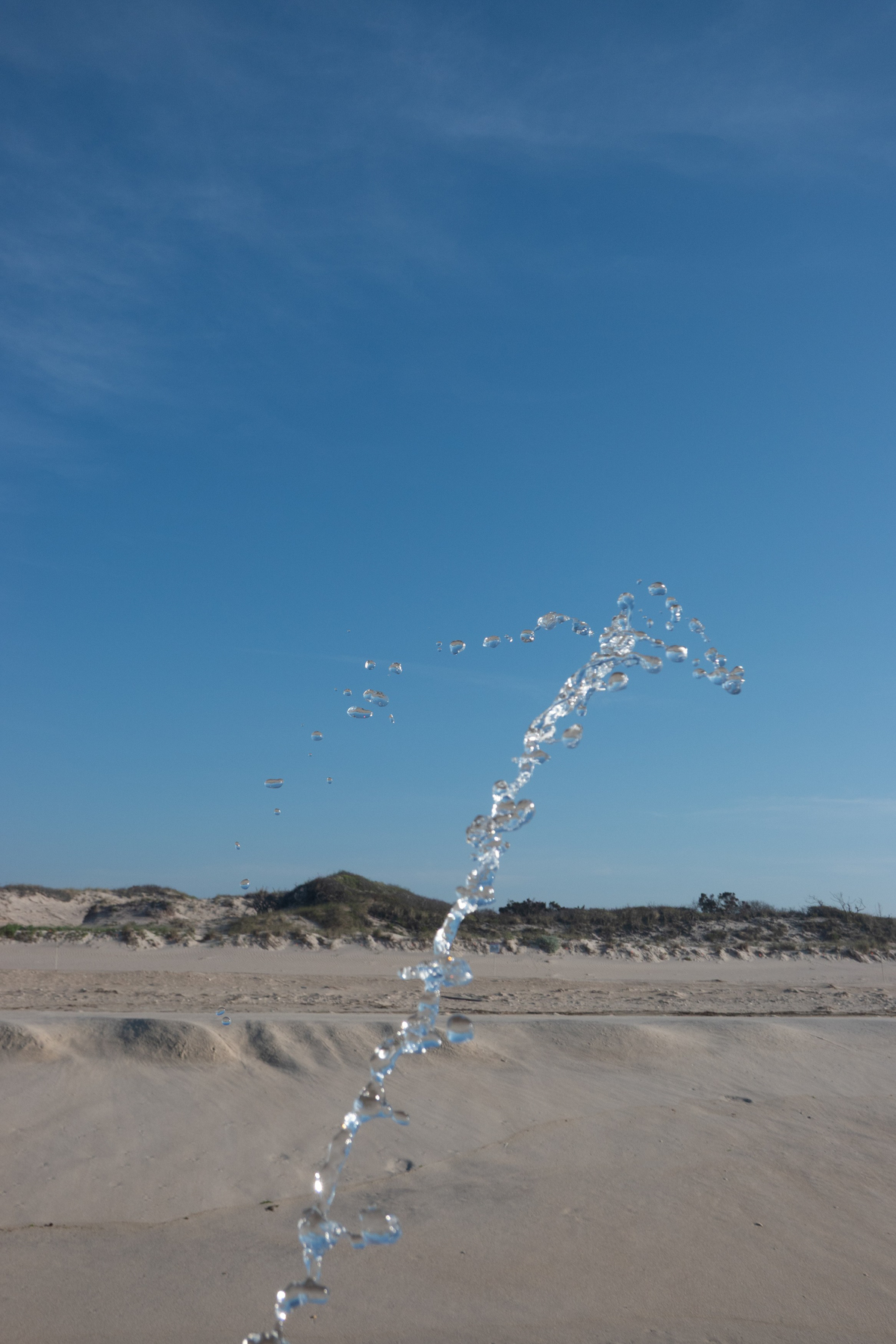
Exhibition review: Glade / Clairière at Galerie Chantal Crousel in Paris
by Morgane Billuart
When my lover first introduced me to his doctoral research in computer vision over drinks at a dimly lit Berlin bar, I listened carefully to his simplified explanation, aware that my understanding of photogrammetry and artificial intelligence was vague and limited. Amused by the premises he had introduced to me, I began speculating alongside him, playfully distilling his ideas into a question I came to coin as the “Five Images Problem”: Which pictures does one need to collect before a world becomes knowable to an intelligent machine, and can a world be reconstructed from images alone, without the experience of having lived it?
In late August 2026, during a road trip along the US East Coast, we decided to weave a playful experiment in image collection, inspired by the Five Images Problem, into our journey. We imagined a plotline and devised a protocol. A fictional character, having suffered a brain injury, could no longer form memories. Equipped with a camera and a series of speculative software experiments, he would drive along the coast, searching for five images to assemble, upload, and hopefully use to reconstruct the world he could no longer remember. To document and create this fictional, visual quest, I brought my Canon 40D, a DSLR camera I hadn’t used in several years.. I was excited to bring it, yet that summer, holding a camera again felt strange. I had forgotten its weight. Even with a script in mind, I remained unsure of what to photograph. The stills of my daily encounters felt precious yet lame, memorable yet unspectacular. Amid an ocean of stories and moments waiting to be collected, I felt lost, inept, unprepared – unable to take photographs.
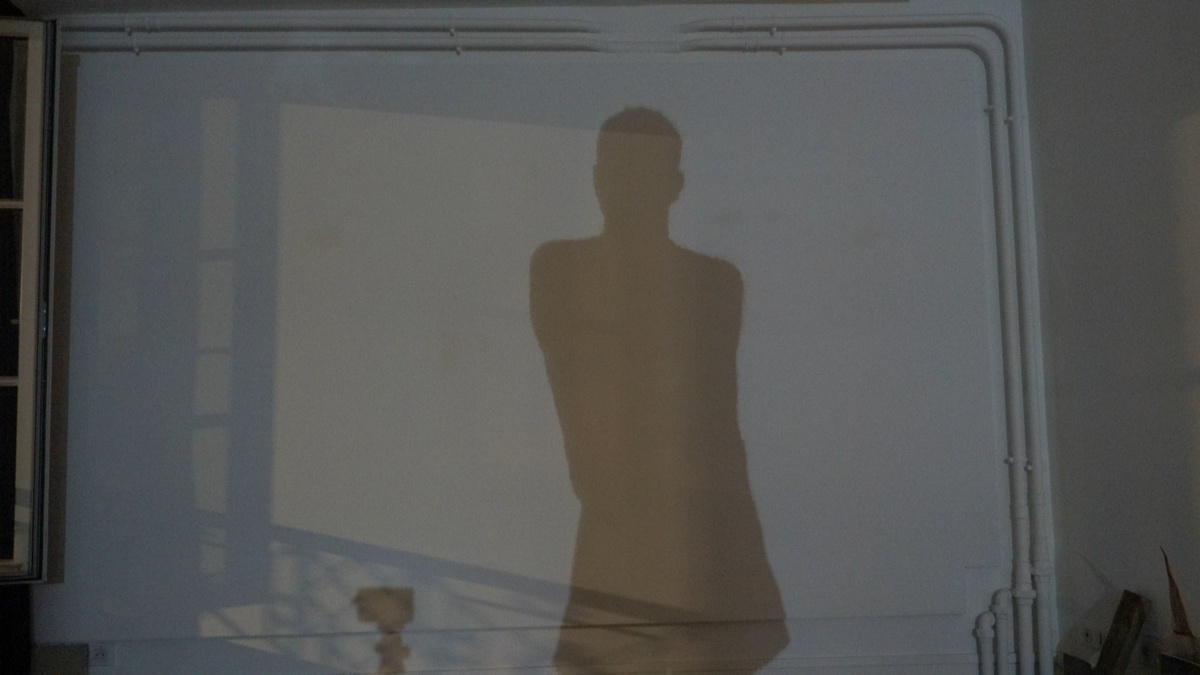
Wolfgang Tillmans, Cité Shadows / Seine Turbulences, 2026 (video still), Courtesy of Galerie Chantal Crousel, Paris.
I was a late bloomer to Wolfgang Tillmans, first encountering his work in 2019 while taking a photography class at Cooper Union led by artist Liz Deschenes. At the time, I regarded analog photography as a false testimony of truth and championed digital practices (how arrogant), mesmerised by the interpolative and speculative possibilities of digital cameras. Tillmans’s reputation, frequently invoked in our classroom, was beyond question. Yet, I did question it. At the time, I belonged to an ecosystem of photographers who considered this kind of work “simple” and “evident,” for lack of a better word. In retrospect, these are perhaps among the most reductive criticisms one can level at photographic practice. What can I say? Back in 2019, everyday scenes and the simple act of taking a photograph didn’t excite me. I was drawn instead to digital processes: editing, layering, interpolating, extracting ever more meaning from static images. I thought of images as perpetually changing, constantly rushing toward their next update. Needless to say, I had little idea of what image-making might eventually become.
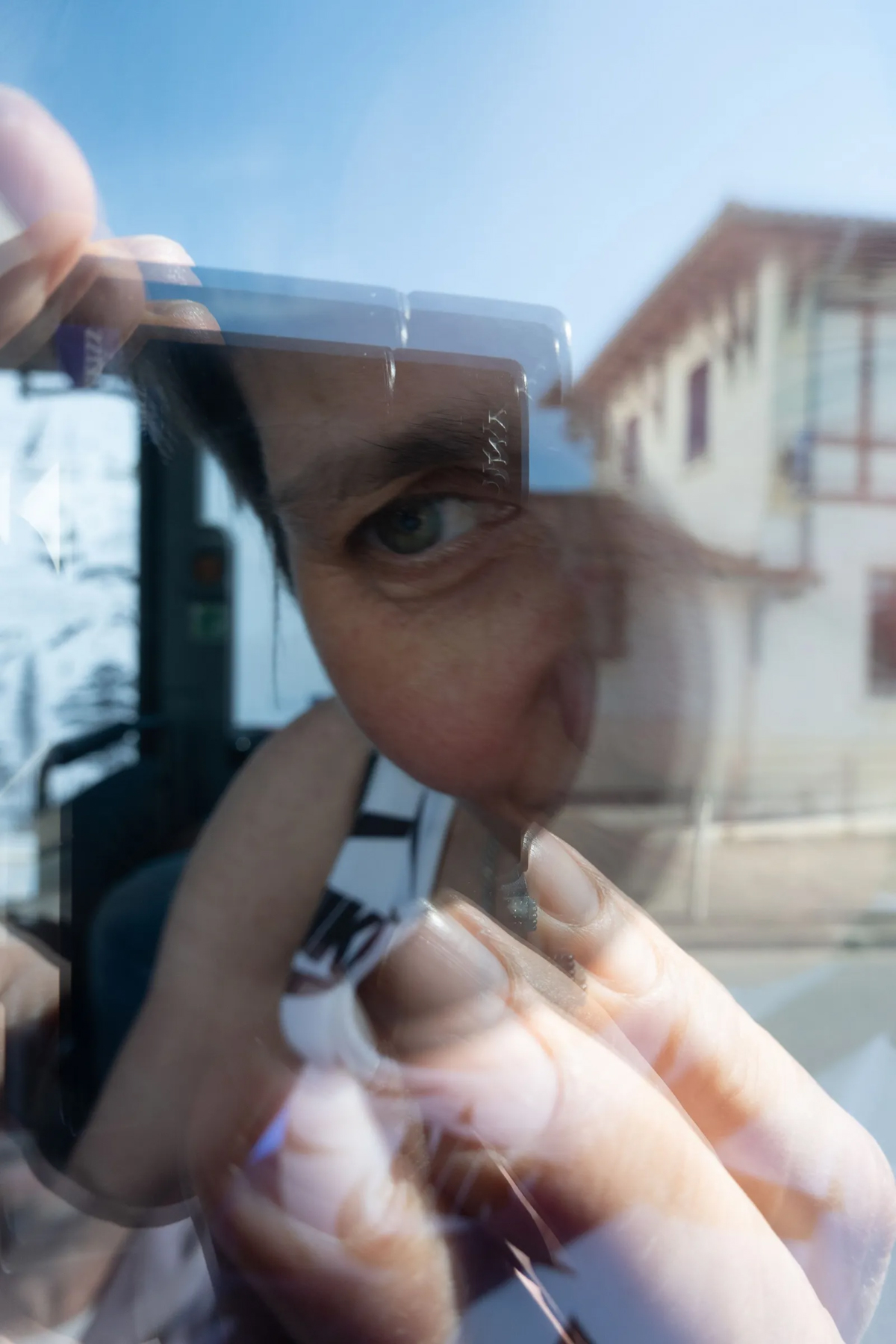
Wolfgang Tillmans, Alex on the bus, 2026, Courtesy of Galerie Chantal Crousel, Paris
Seven years later, walking through Glade / Clairière, Tillmans’s latest exhibition at Galerie Chantal Crousel in Paris, my eyes first settle on Alex on the Bus (2026), an image that seems to belong to a way of seeing I had forgotten. Isn’t it rare these days to encounter the reflection of a camera in a vitrine, the mirrored technological object itself acting as a timestamp, a proof of passage? This simple, almost archaic gesture seems like a forgotten ballad, and I briefly feel invited to rediscover the childlike pleasure of a photographic practice. Moving along the images on the walls, which feel less like artworks than collected memories held in place with tape, I feel both seduced by and removed from Tillmans’s practice, like a not-so-old soul longing for an earlier way of seeing the world. I recognise an old promise of photography: its apparent liveness and genuineness, qualities I once took for granted. It’s a world which I, myself, do not know how to capture anymore.
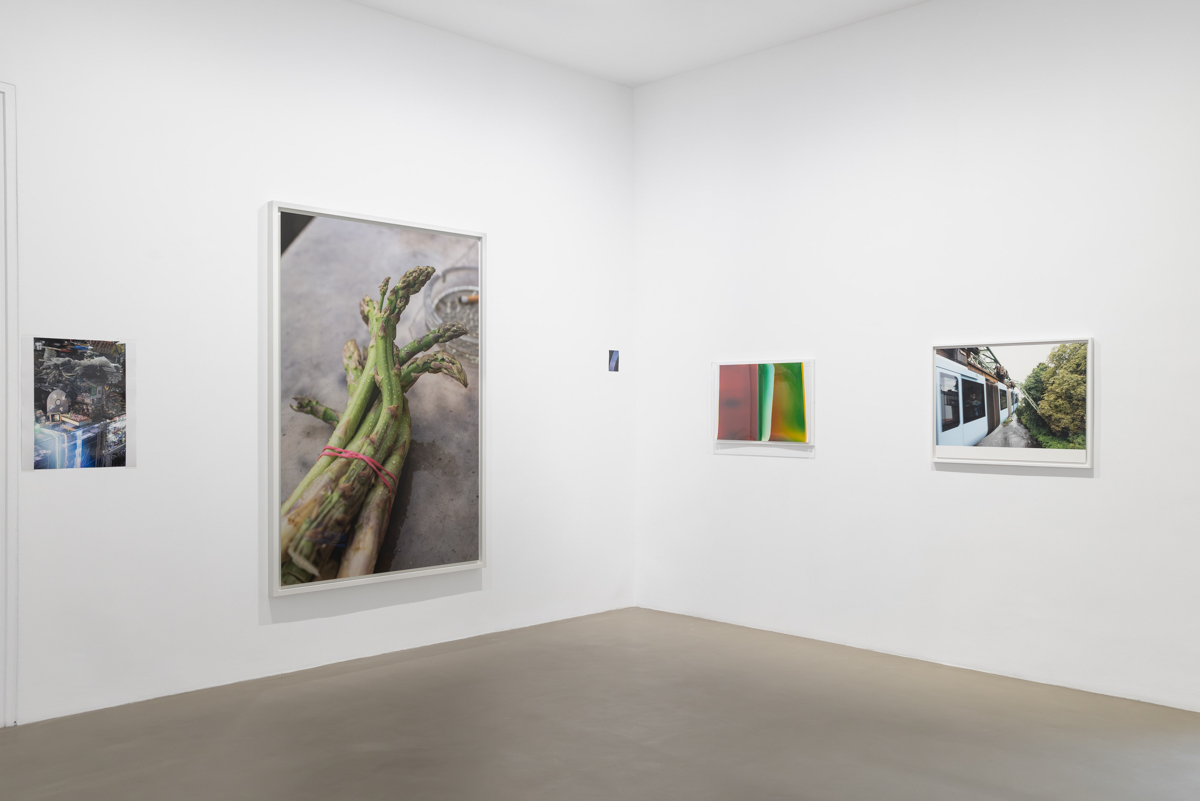
Wolfgang Tillmans, Glade / Clairière, exhibition view, Galerie Chantal Crousel, Paris (2026). Courtesy of Galerie Chantal Crousel. Photo: Jiayun Deng
Since participating in Spike’s Everything is Computer roundtable in Berlin, alongside Adina Glickstein, Christopher Dake-Outhet, and Dean Kissick, I have found myself endlessly questioning the state of images. Much like the mathematicians who have expressed grief over what AI-generated findings might mean for research and discovery, I mourn a time when images were still tethered to the material consequences of a moment, an experience – when seeing the world meant encountering it rather than endlessly rendering it. Walking through Glade, I feel as though I have stepped into a time capsule. It is as if a maternal figure were murmuring to me that perhaps AI never happened, that images were always constructed, and that there still is, and will continue to be, a world to know. At the same time, I feel a sense of unease, one that presumably comes from being seduced by the aesthetic markers of a world I deemed more reassuring, one surrounded by a certain kind of warmth. Yet I know this is always the illusion of the past.
It is limiting, perhaps even painful, to consider Tillmans’s work solely through the lens of what computation is doing to our practices at large, and to images in particular. The photographs, their material surfaces, and the industrial ropes laid across the gallery floor seem to ask me to draw a line and resist understanding them through the framework of our computational condition.
And yet, these two realities converge around a question I cannot quite shake: when the result precedes the process, what happens to anticipation and the pleasure of imagining the story that brings an image into being? Are we moving too fast?
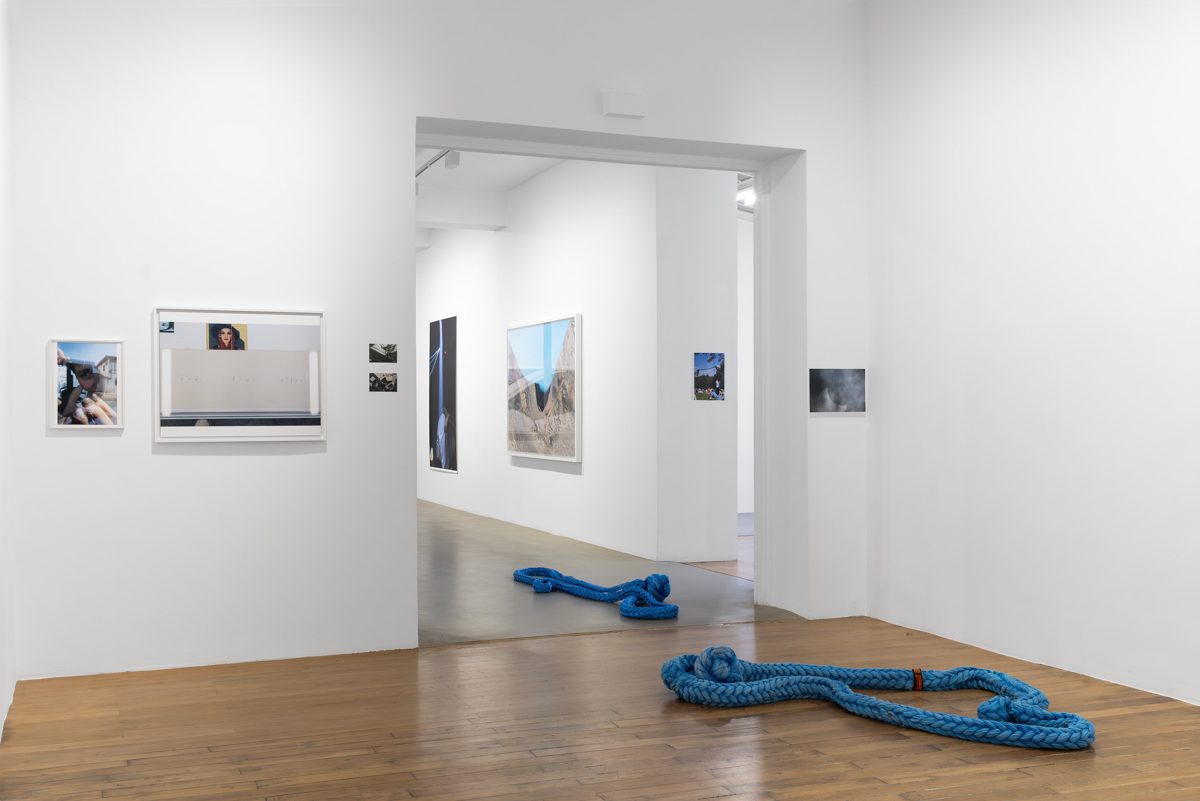
Wolfgang Tillmans, Glade / Clairière, exhibition view, Galerie Chantal Crousel, Paris (2026). Courtesy of Galerie Chantal Crousel. Photo: Jiayun Deng.
In Paysages à Grande Vitesse (2026), Tillmans brings this question into focus through photographs taken from high-speed trains across different countries over several decades. Developed through an experimental protocol refined over time, the series embraces a degree of loss of control, allowing the speed of the train and the camera’s technical limitations to shape what becomes visible. Some images, taken with early iPhone cameras, bear the distortions of rolling-shutter technology, in which the sensor records the image line by line, producing temporal discrepancies. Picture-making here emerges as a long-term process, one shaped as much by technological mediation as by the lived experience of space and time. In that sense, Tillmans is no fundamentalist: he has long played with the boundaries between analogue and digital, while embracing process and failure as integral to his artistic practice.
In his recent lectures at the Beaux-Arts de Paris, Tillmans reflected on the processes that sustain his approach to photography and art, one grounded in appreciation and curiosity: “Only when you assume that your work is shit, is there any hope for some of your work to be good. That is my default setting. It is so unlikely that this arrangement will result in a good still life. It’s most likely that it will be lame, contrived, wanna be, heavy-handed, lacking tension. It’s against these odds that a good work sometimes emerges, finds itself. This is not pleasant, but it is key to not be scared by this feeling, to not be ashamed of it, to not give up because of it. The key is to carry on despite this default setting.” This year, I find myself increasingly drawn to Tillman’s preoccupation with fragility, found both in the ordinariness of its subjects and in the delicate strips of tape with which the images are attached. A practice that does not treat the image as a final, consumable idea, but instead resists the impulse to make it conform to a default.
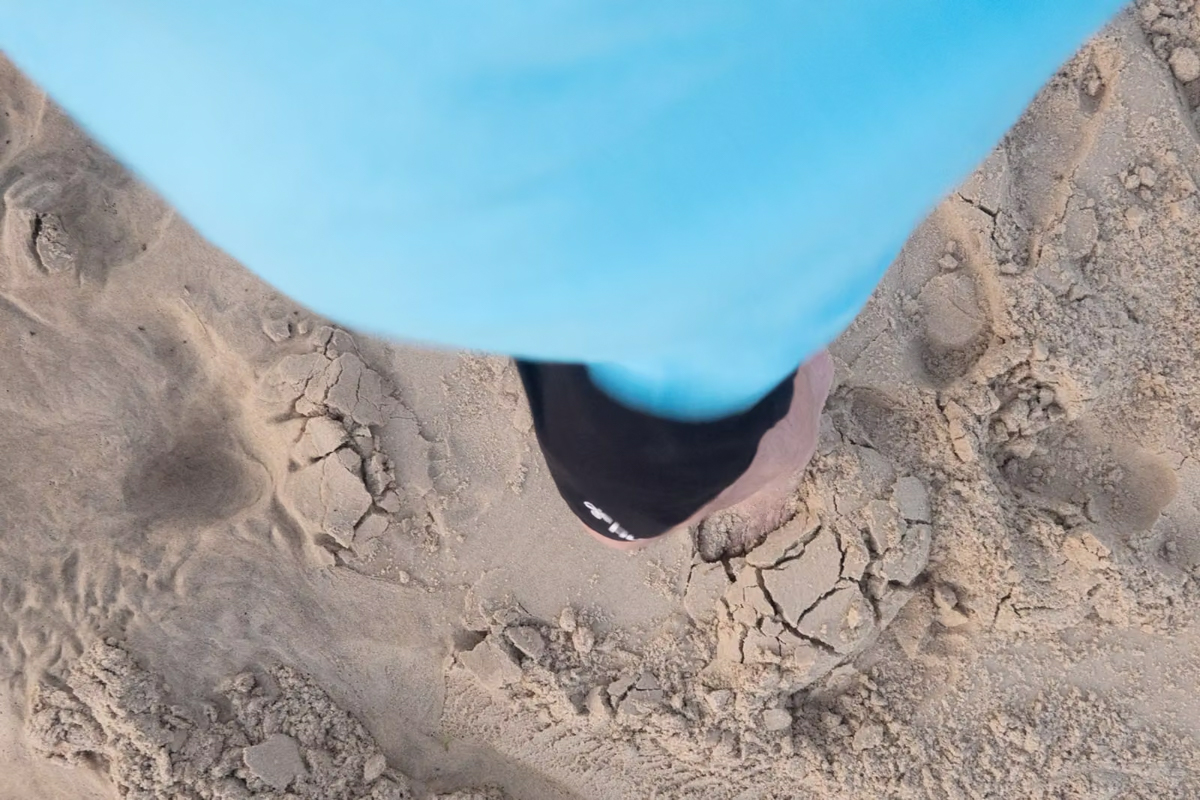
Wolfgang Tillmans, Lacanau (self), 2026, Courtesy of Galerie Chantal Crousel, Paris
In retrospect, Tillmans’s practice, in all its naivety and generosity, embodies a form of photography I had yet to fully appreciate when I first encountered his work – one concerned with materiality and traces, with life and decay. In Lacanau (self) (1986), and again forty years later in its 2026 counterpart, Tillmans returns to the same place, allowing the passage of time to become part of the work itself. There is a promise in this gesture: the possibility of returning and finding that the act of seeing and remembering still holds meaning, even as the world and the person looking at it have changed. In Glade / Clairière, might the apparent simplicity and genuineness of the shots suggest that traces of life, in their unspectacular presence, can offer a remedy for the image-grief I’m in? While these images offer some reassurance, frustration lingers, as they reveal a generation of artists who witnessed the world and captured it, still inhabiting their own kingdom of perception and image-making, while younger generations are left hungry for meaning.
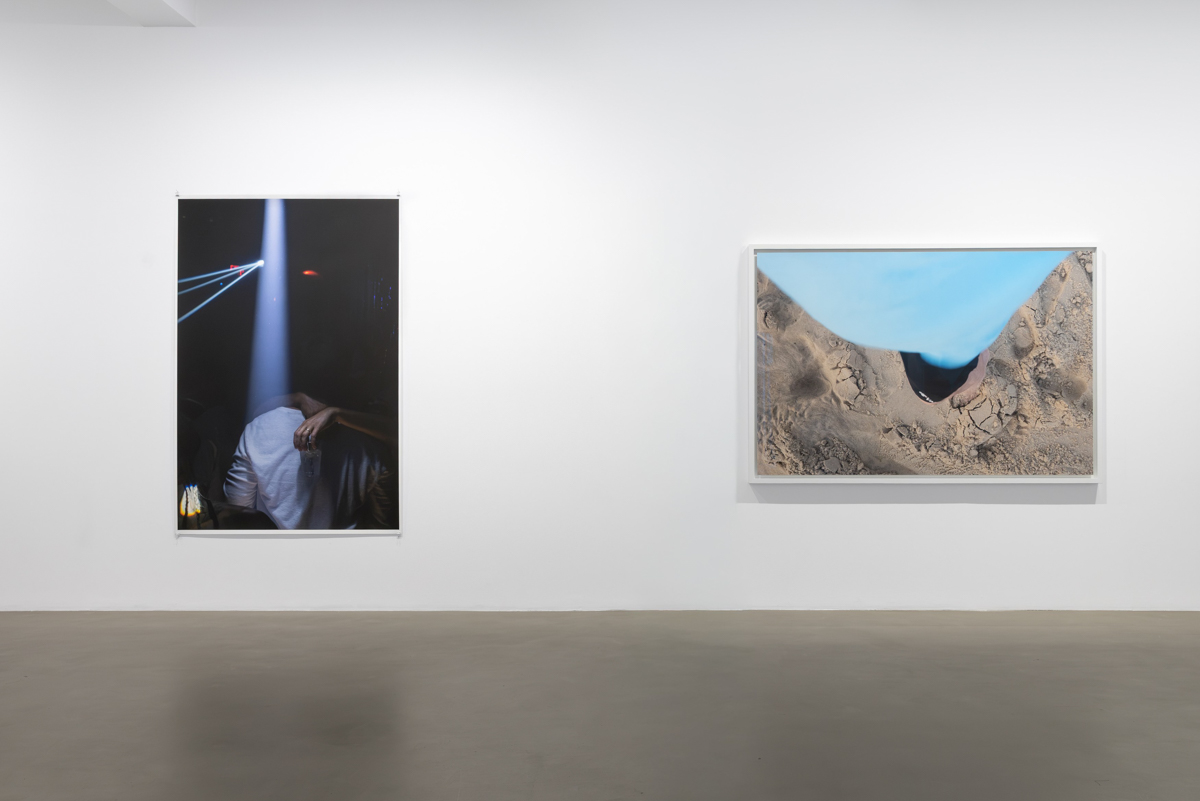
Wolfgang Tillmans, Glade / Clairière, exhibition view, Galerie Chantal Crousel, Paris (2026). Courtesy of Galerie Chantal Crousel. Photo: Jiayun Deng— Galerie Chantal Crousel.
Because, indeed, the world has changed, but Wolfgang Tillmans’s practice hasn’t. In Lighter (2005–ongoing), the artist continues to explore photography as a material process, folding photosensitive paper and exposing it to coloured light. The resulting works hover between image and object, their surfaces bearing the traces of the processes that bring them into being. At a time when images increasingly appear detached from the labour of their making, there is something old-school, yet, once again, maternal, about this insistence on materiality and the sustained curiosity about what happens when light, matter, adventure, and intention meet. The recipe for life, perhaps. Have I forgotten this?
I hate to admit that I might appreciate the naturalistic, simple and ordinary, because it feels like the beginning of a conservative impulse, a reluctance to accept that the world changes. Whether an embodiment of the past speaks to wisdom or privilege remains an open question.
Coming home, I imagine Wolfgang Tillmans as the image collector in the Five Images Problem, bringing to life the world I grew up in. I don’t wish to be nostalgic – yet, like any photographer, I crave the world in which no super-intelligent machines replicated the process of research and image-making. Sifting through the few photographs I took during my trip to the US, I find myself hoping to rekindle my appreciation for life archiving and memory-making. But the only photograph I end up keeping is one of my lover and me standing before a mirror, our images caught in its reflection, and between us, the camera.

Five Images Problems, Morgane Billuart, 2026. Courtesy of Morgane Billuart
Header image: Wolfgang Tillmans, Intervention, a, 2026, Courtesy of Galerie Chantal Crousel, Paris