
by Geremia Trinchese
We Are Making a Film About Mark Fisher is directed, filmed and screened exactly as the British philosopher would have wanted. It enacts the ideas he spent much of his life insisting were still possible: decommodify cultural production, exercise collective agency amid the ruins of neoliberal atomisation, explore solidarity through participation and investigate the possibility of shared labour and DIY practices.
Without a budget, studio backing or institutional permissions, London-based directors Sophie Mellor and Simon Poulter began the project alone, later enlisting the support of 70 people through Instagram (@markfisherfilm) and personal networks. The initial idea was to demonstrate that it’s truly possible to make an authorless film collectively. Starting from scratch and using the tools at their disposal in a counter-extractive way, they developed the entire project by using Instagram as a public online site for gathering, with even the film’s theoretical foundation emerging from a collectively curated open-source board. Instagram is where I – and many others – first encountered the film, which is described as a “65-minute cinematic experiment exploring the continuing relevance of the late cultural theorist’s ideas on capitalism, culture, and the future”.
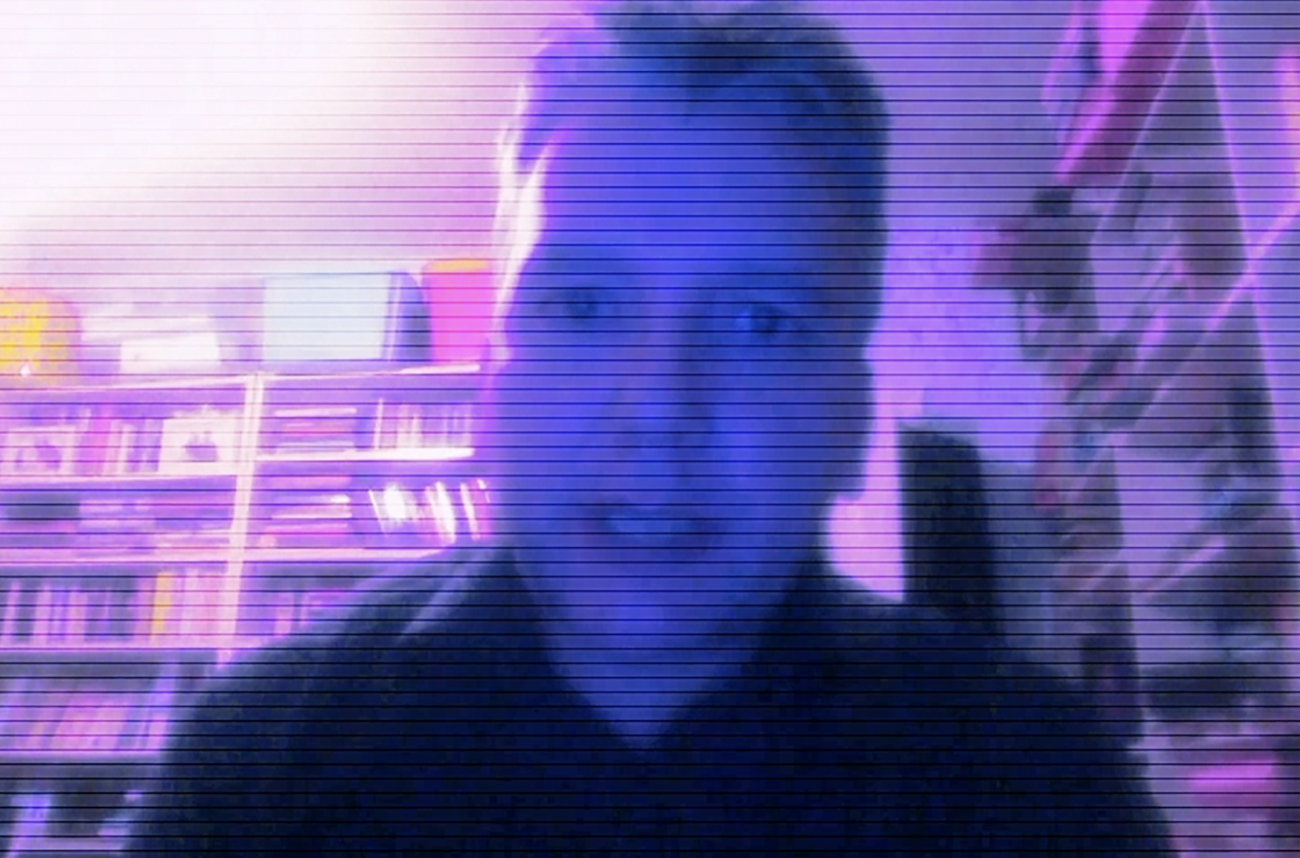
The film starts with Parkins, a time-drifting character wandering through ghostly landscapes and digital spaces. Between scenes, Fisher’s ideas are discussed by a range of figures: a cultural writer, a researcher focused on Fisher’s theories, a university teacher, an occultist, a strange shadow with a heavily reverberating voice. As he wanders, Parkins moves between online and offline worlds, behaving like a shared consciousness trying to connect disparate people through his presence. Meanwhile, protests fill the streets, and a diffuse sense of discontent lingers in the background.
We Are Making… is kaleidoscopic and choral in its structure: it refuses dogmatism and calls instead for openness and cooperation as the only way to challenge reality. The project is possible because new generations keep reading Mark Fisher, realizing how the world he described still haunts us. There is something hopeful in still seeing people place their faith in genuinely rhizomatic forms of action as a way of overcoming anxiety and paranoia.
The film’s collage-like editing deliberately raises these crucial questions: why did Fisher take his life? If he had survived past 2017, would things have been different – or better? Would he have found different words for the present? Is it our responsibility to answer what he could not? The images function as a speculative tool to imagine what Fisher might have made of the contemporary mess we are living through. But we are all aware of how the structures of surveillance and power produced by platform capitalism are exactly what Fisher foresaw with dread in his writing.
The future we were promised no longer exists, and just as our destiny remains uncertain, the film leaves the viewer without any satisfying resolution. The only true form of closure lies in the conversations that follow each screening, which are conceived as occasions for discussion and gathering. This is why you’ve probably seen so little about the film: the idea is that it continues beyond the screening room, changing each time, much as John Cage imagined with 4’33’’ – a work structured around silence, murmurs and ambient sound.
Even if the whole experiment sometimes resembles one of those “hopecore” TikTok trends, in which everything appears bright and affirming, the act of making the film moves entirely against that logic. Fisher warned us about such feelings, insisting that what we need is real action, not dreams alone nor something to just wait for.How long have the nine years since Fisher’s death felt? Is punk still imaginable today? How can we begin from the evocation of failed promised futures to act together? We are making… is not a perfect film, but it’s an effective vehicle for collective dreaming, and a compelling exercise in resisting the doom-scrolling machinery of capitalist realism.