
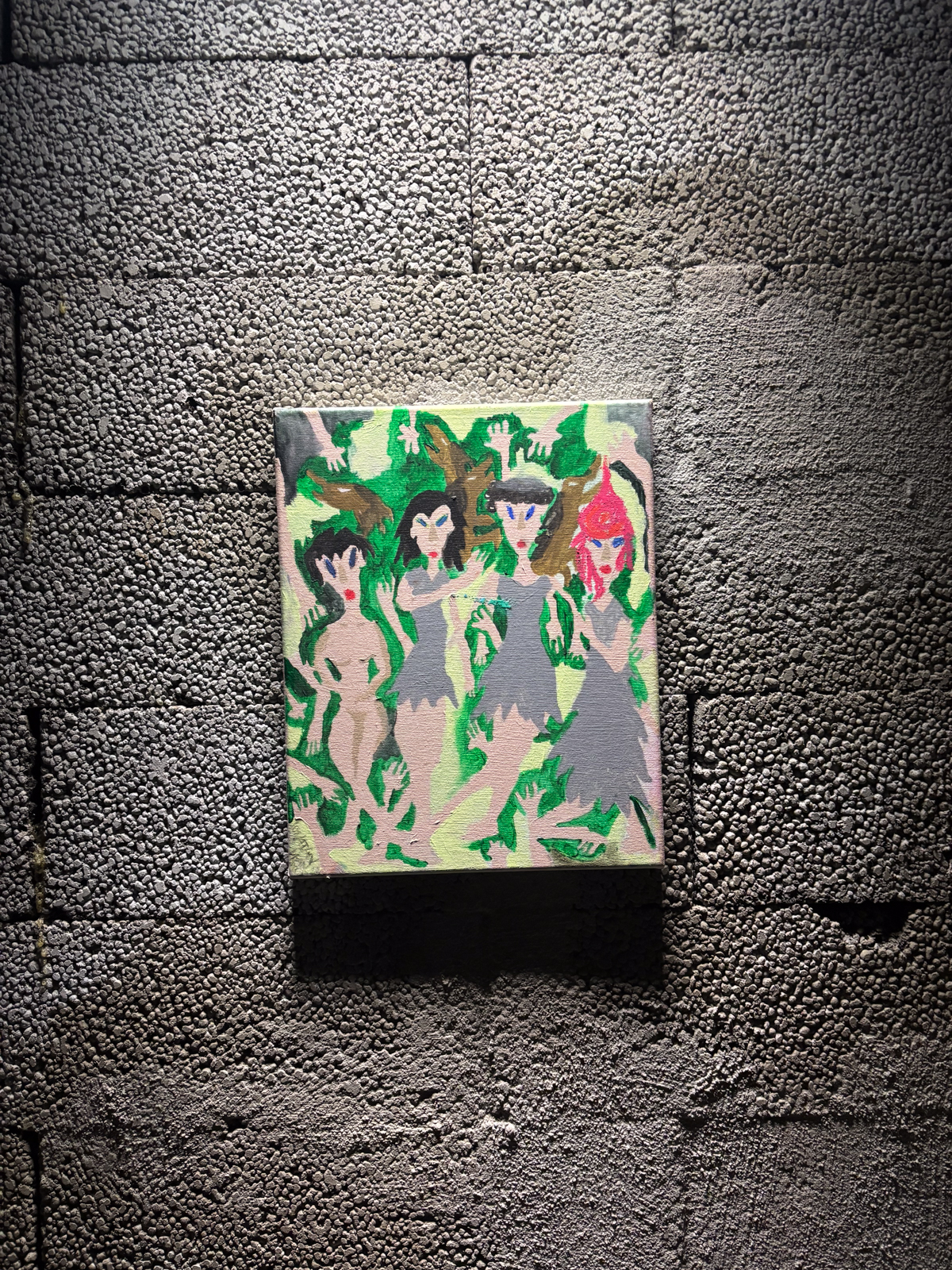
Jonathan Leandoer Håstad’s exhibition in Stockholm is generic and unsettling – but really, really good.
by Lars Erik Lappalainen
Already in the first installation I encounter upon entering Jonatan Leandoers Håstad’s exhibition, set in an old gasworks in Stockholm, there is a sense of temporal displacement. The space is somber; every window along the curved exterior wall is covered except one, which lets in a low, horizontal light – as if it were early morning or late afternoon, even though I arrive around lunchtime. To look at the room feels less like perceiving than recollecting it – and, more so, like a memory of something that has never happened to me. Beneath the windows is a built-in upholstered bench. You can sit there, watch people come and go, and gradually realize that you’re also listening to a soundtrack by Milan-based, PAN-affiliated musician Heith, playing quietly in the background. The vibe is that I’m sitting inside an image, its present positioned somewhere between “once upon a time” and “this is how it was,” exactly like now but already in the past, floating free of any before or after.
Moving on, I pass through a room and a passageway displaying a handful of paintings, before entering a brightly lit room where paintings and collages are densely arranged in a salon hang. This is presumably the part of the installation to which the exhibition’s title, Collected Works 2016–2026, refers.
Stylistically, the work is fairly generic. It looks like what you might expect when someone paints for a pastime or as a form of therapy. What emerges appears almost like a style of its own, as if he was mimicking art. It’s a little bit unsettling. Usually with this kind of work, what really distinguishes one picture from another is what it depicts, often something personal, but I know too little about the artist to recognize anything specific in these images. As individual works, they probably mean much more to the people who are here because they’re fans of Yung Lean – the artist’s stage name and alter ego as an epoch-defining musician. They can probably connect the motifs in the paintings to songs and themes, perhaps even to episodes from Yung Lean’s life.
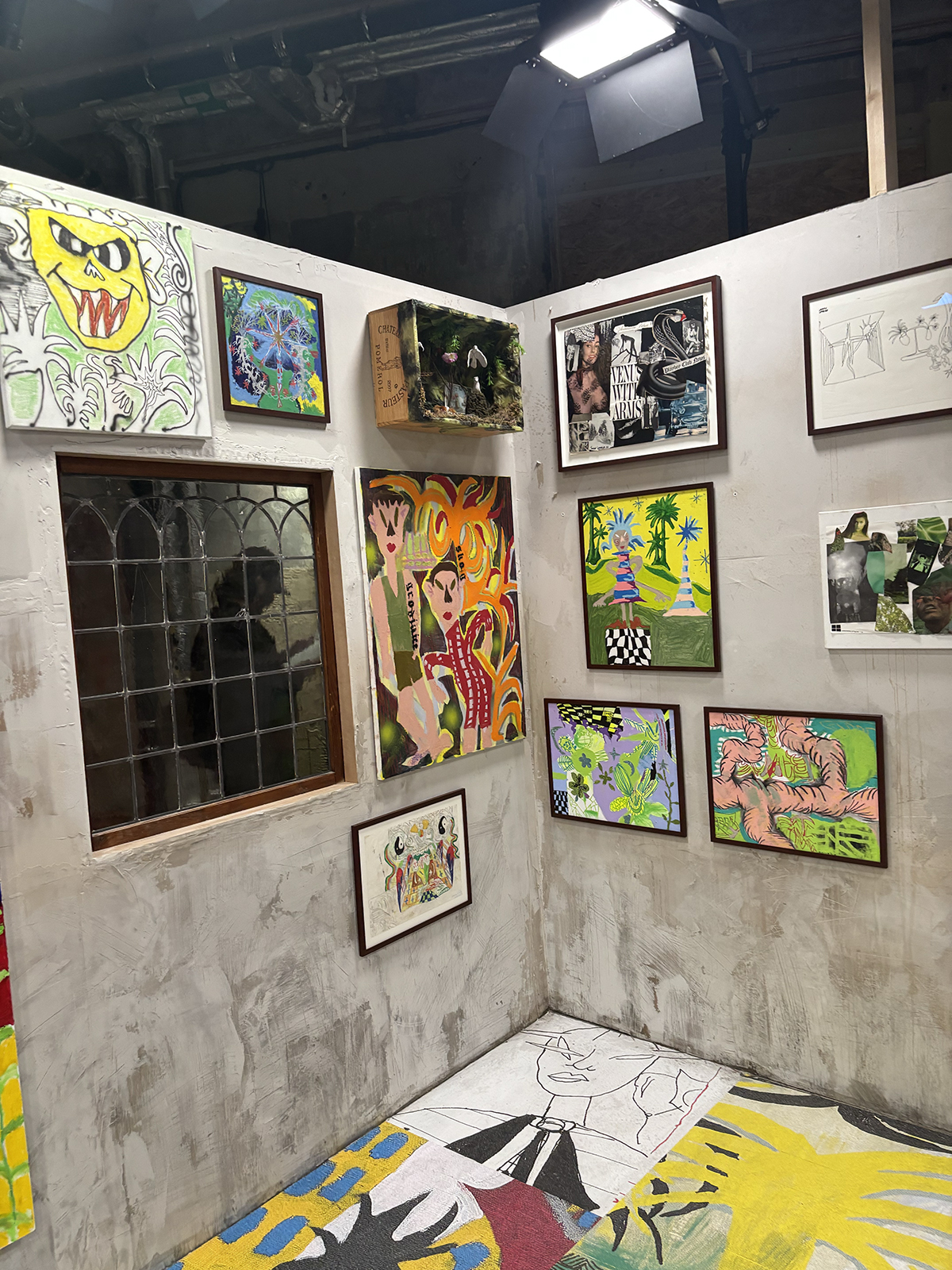
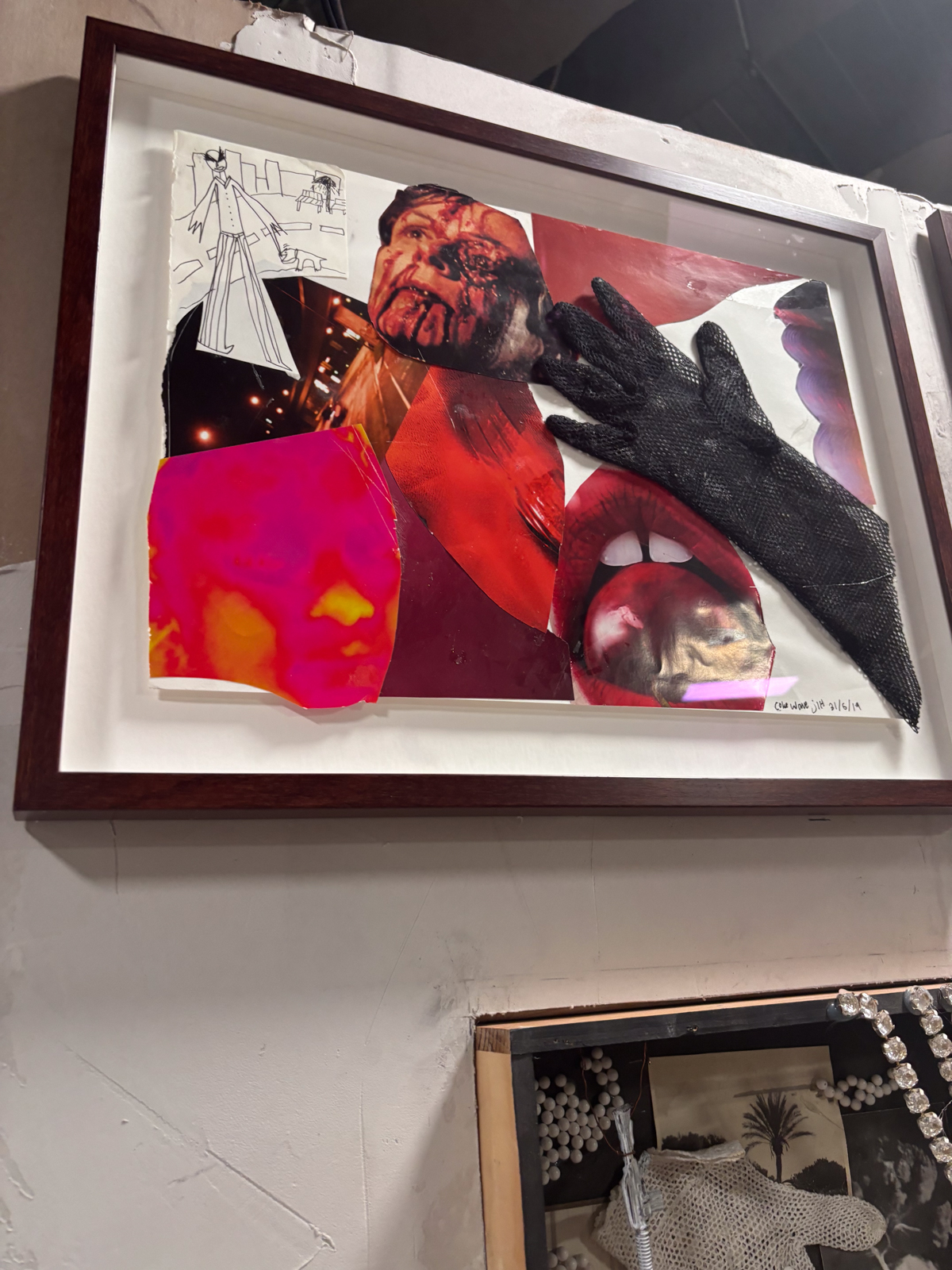
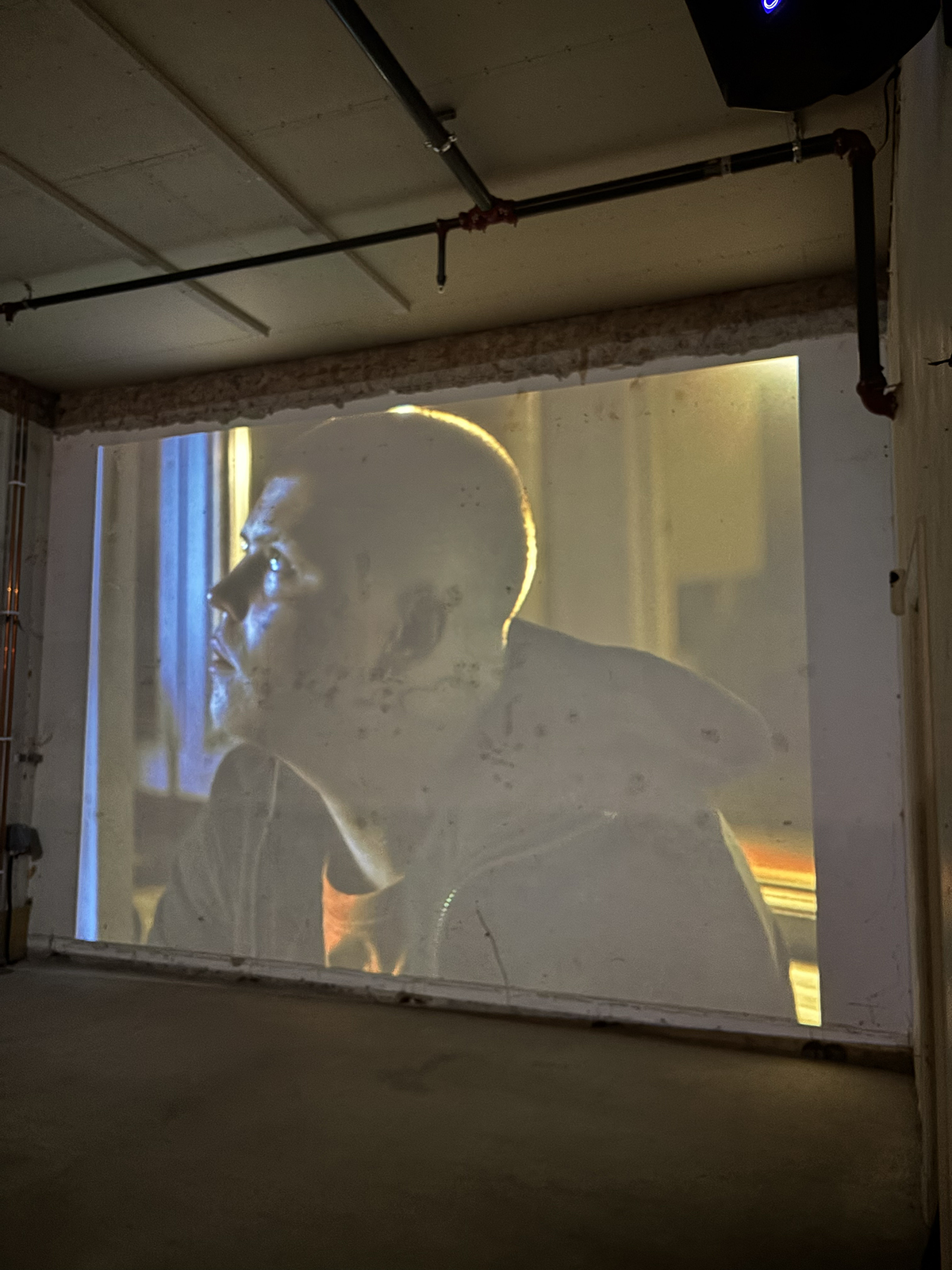
In the room furthest back, visitors sit on a sofa wearing headphones, watching a YouTube channel curated by the artist. Their attention is completely absorbed in Leandoer’s selection. There’s no chance of getting a seat. For me, it helps that the slightly labyrinthine layout Håstad has created with Andrea Belossi and the curators Slobodan Zivic and Kaj Lindhé Gimdal keeps pulling me onward, from one space into the next.
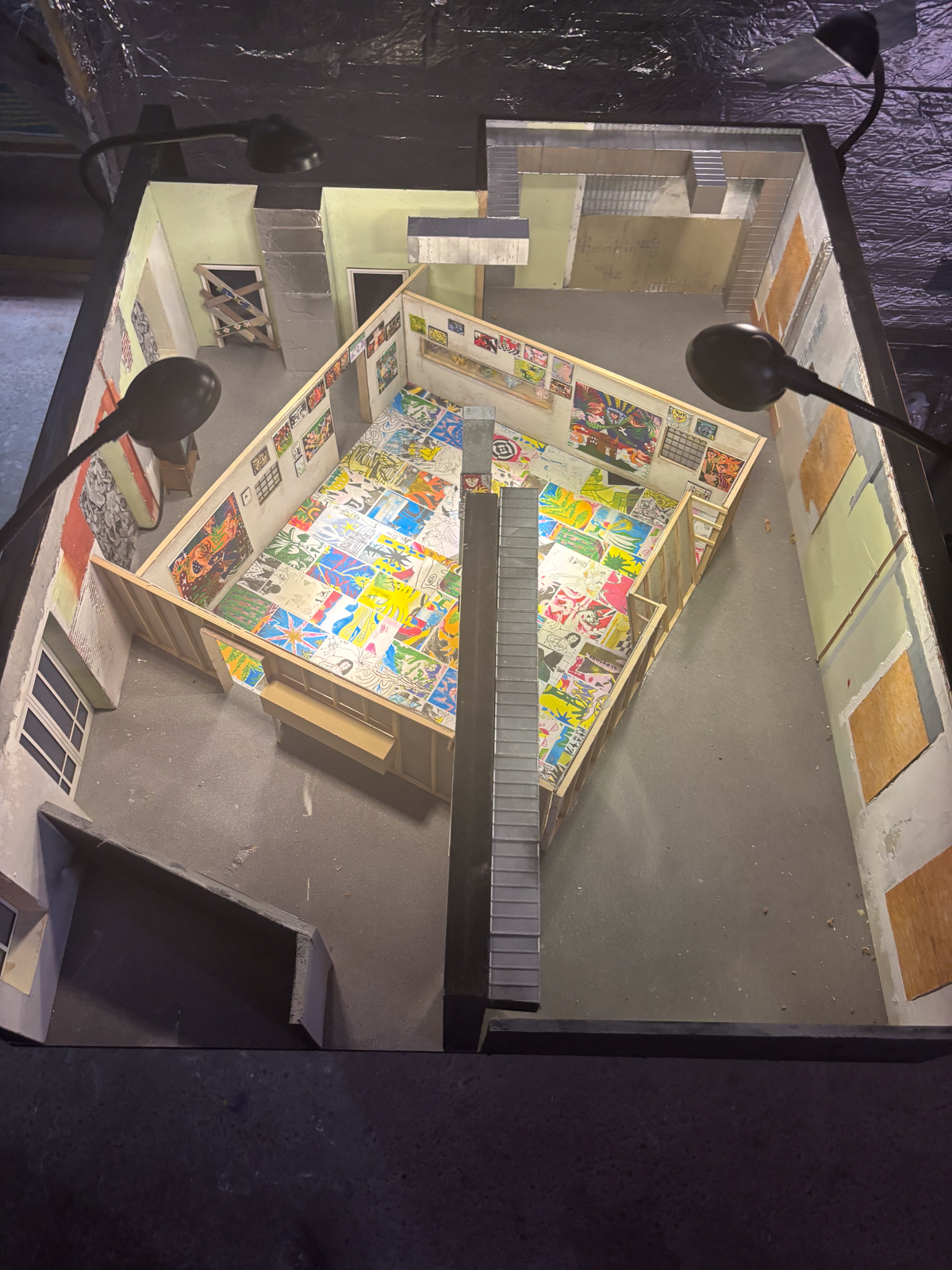
In that last room there is also an architectural model of the exhibition itself, with each work carefully placed where it appears in the actual rooms. Looking at it, I feel completely outside the exhibition, as if I could take it all in from a distance without having to interact with neither the art nor the people around me. I come to think of my teenage son, who likes to find rooms like this in video games – glitches that allow him to wander through a game without having to respond or participate. This work produces a similar effect. I’m inside the image, able to imagine myself walking around and, in the real world, looking at the things hanging on the walls of the model.
I realize that this is how the exhibition wants me to move through it: simply looking, without having to play along, without having to obey all the rules that can make an art context feel like a set of demands. I may look however I please.
It’s actually a lovely feeling. In the room next door, a film prompts further impulses for looking. It is full of images we’ve seen before. A guy drives his girlfriend through a beautiful landscape on the back of a motorcycle. Their arrival at a summer house is filmed covertly. In one scene, the artist lies on the ground with a bloody face – and can’t help but smile at the camera. It’s an incredibly joyful image, the kind of thing that would normally be cut out and relegated to the blooper reel. Here, though, it becomes one of the highlights of the visual language: the moment that brings the truth behind the images to the surface.
The cliché appears to be intentional and seems to communicate that what matters is that you like it, that you enjoy making it – and perhaps that you can find a certain sense of community in doing so.
This shapes the way I look as I spend a long time wandering among the images, until the exhibition begins to seem like the realization of a fantasy about what an art exhibition might be. It reminds me, in a way, of how the Romantics turned the genre of “fantasy” into a way of giving expression to musical ideas that were not meant to be developed and therefore never fully realized musically. Here, the idea seems not to be to simply make an art exhibition, but to make an art exhibition as a fantasy.
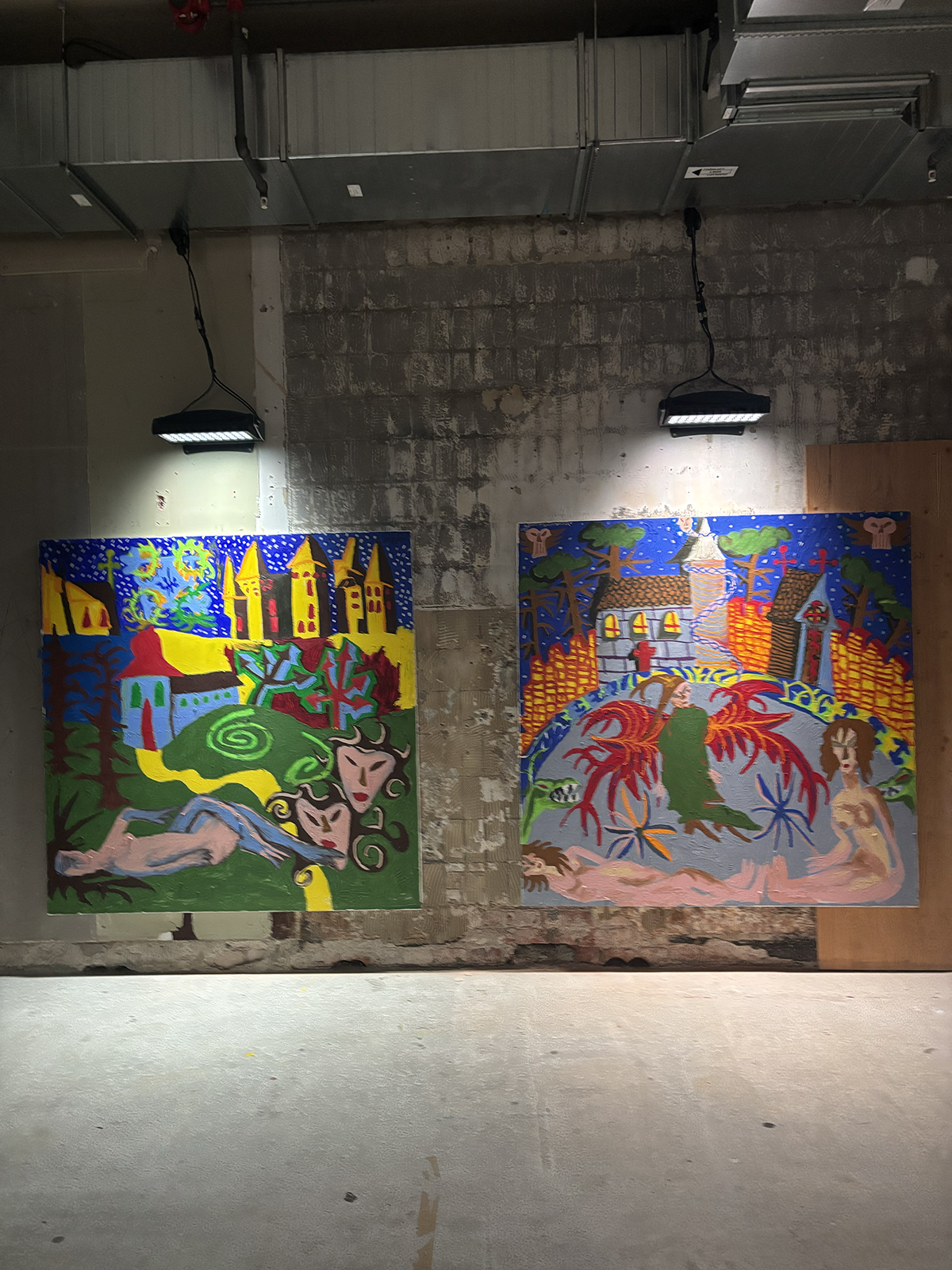
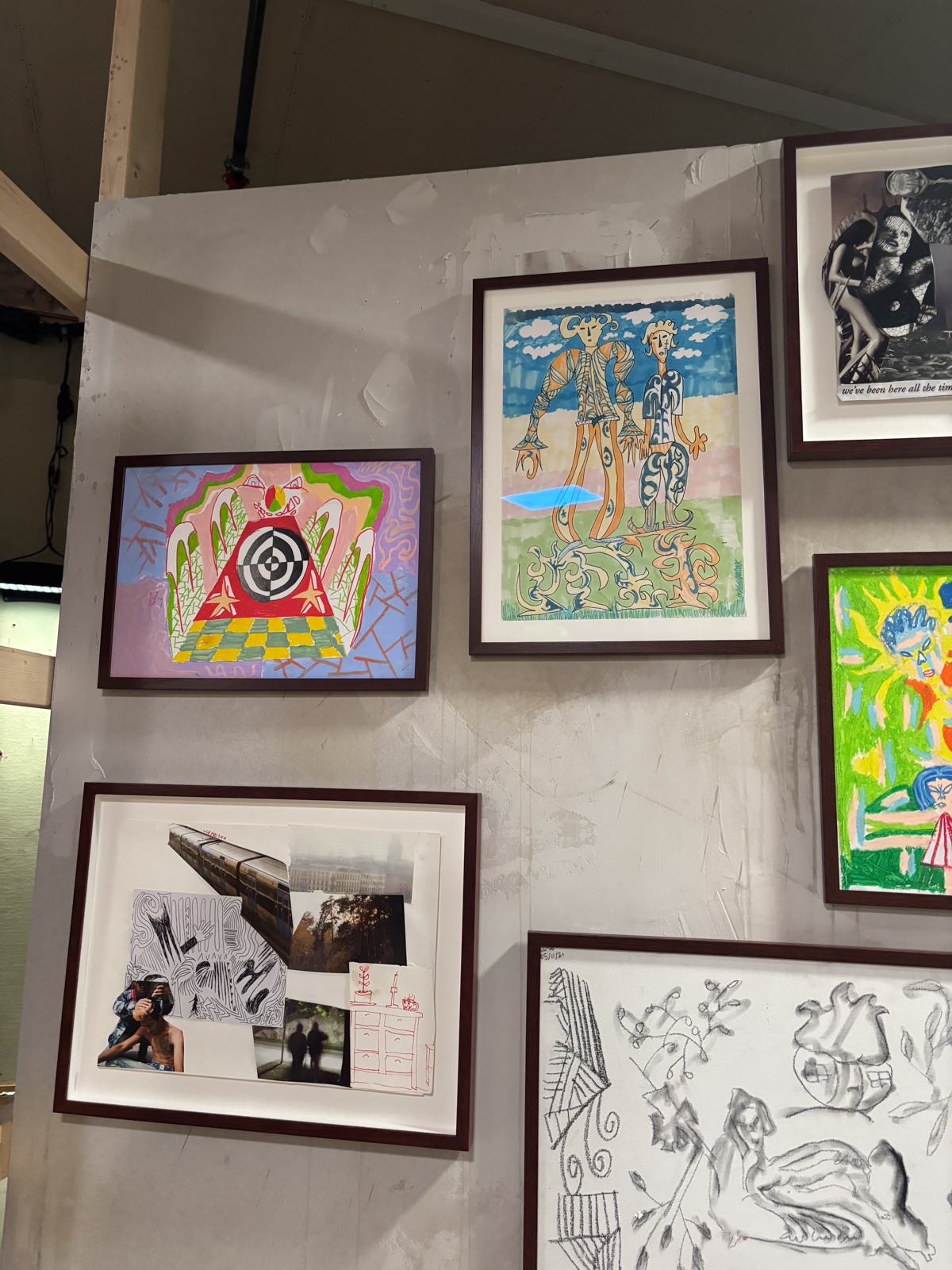
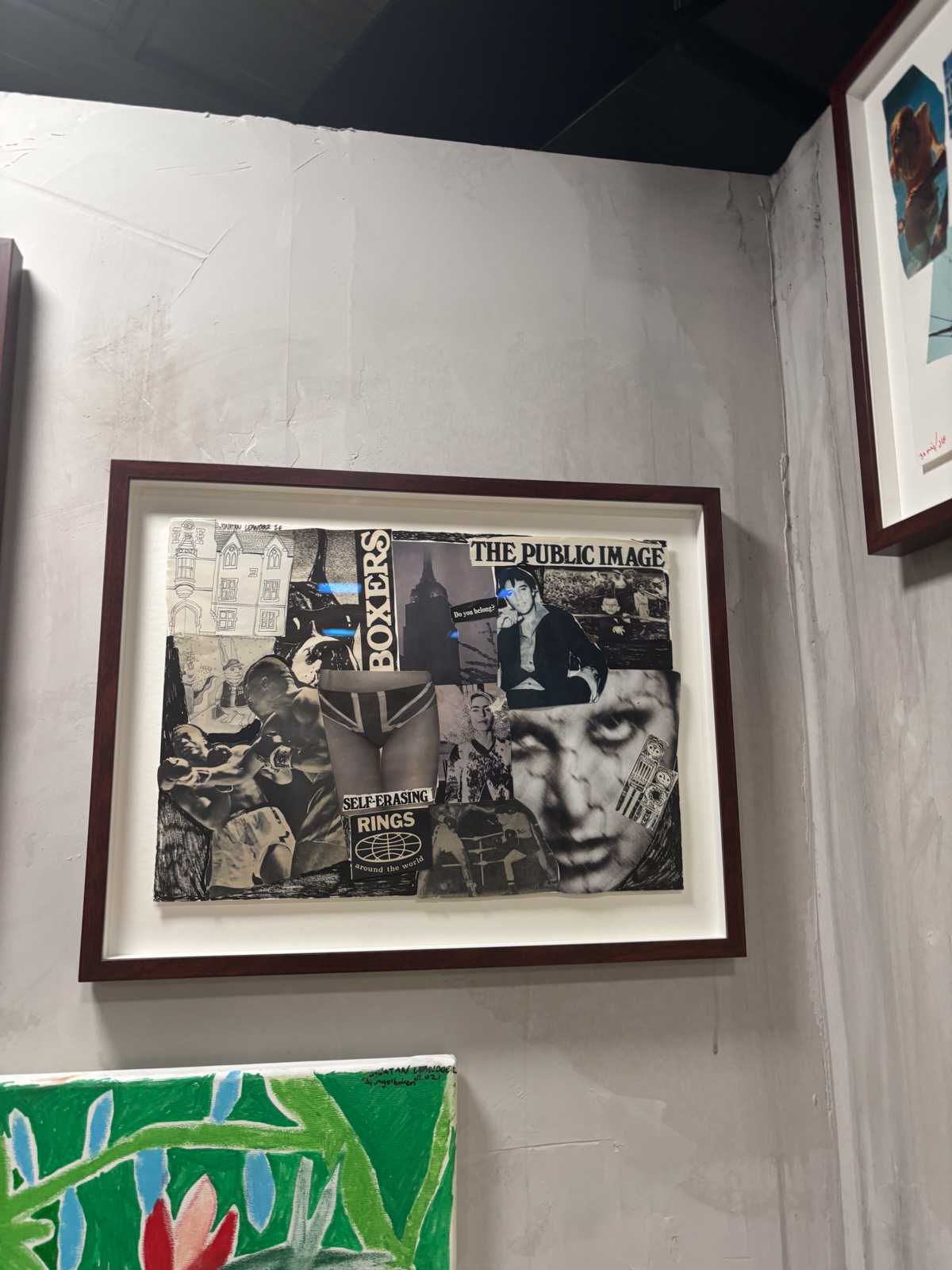
It’s a little like being allowed to walk around a museum you’ve seen in a comic book, where every image has all the qualities you associate with art. In this case, much of that quality is drawn from early twentieth-century art movements (Art Deco, Fauvism, Expressionism), and perhaps some elements of graffiti. But just as important, I think, is the anonymity of it all, what I earlier called its generic quality. It lends a universal human touch to all of this, which emerges equally as both art and non-art. Everything looks unmistakably like art, while remaining oddly unspecific.
The point isn’t to demystify art. It’s to emphasize the accessibility of art as an activity and as a form of community – as in the film, when four people with obviously artificial, distorted faces sing folk music together. Art doesn’t even have to be good to be really, really good.
I take the significance of this exhibition almost as an appeal to the cultural sphere. As Western societies become increasingly reluctant to give people agency and freedom, they keep extending formal education, turning practical professions into academic disciplines, and postponing or discouraging people’s ability to initiate and carry out projects of their own. At the very least, culture should be a place where people are allowed to exercise authority over their own activities.
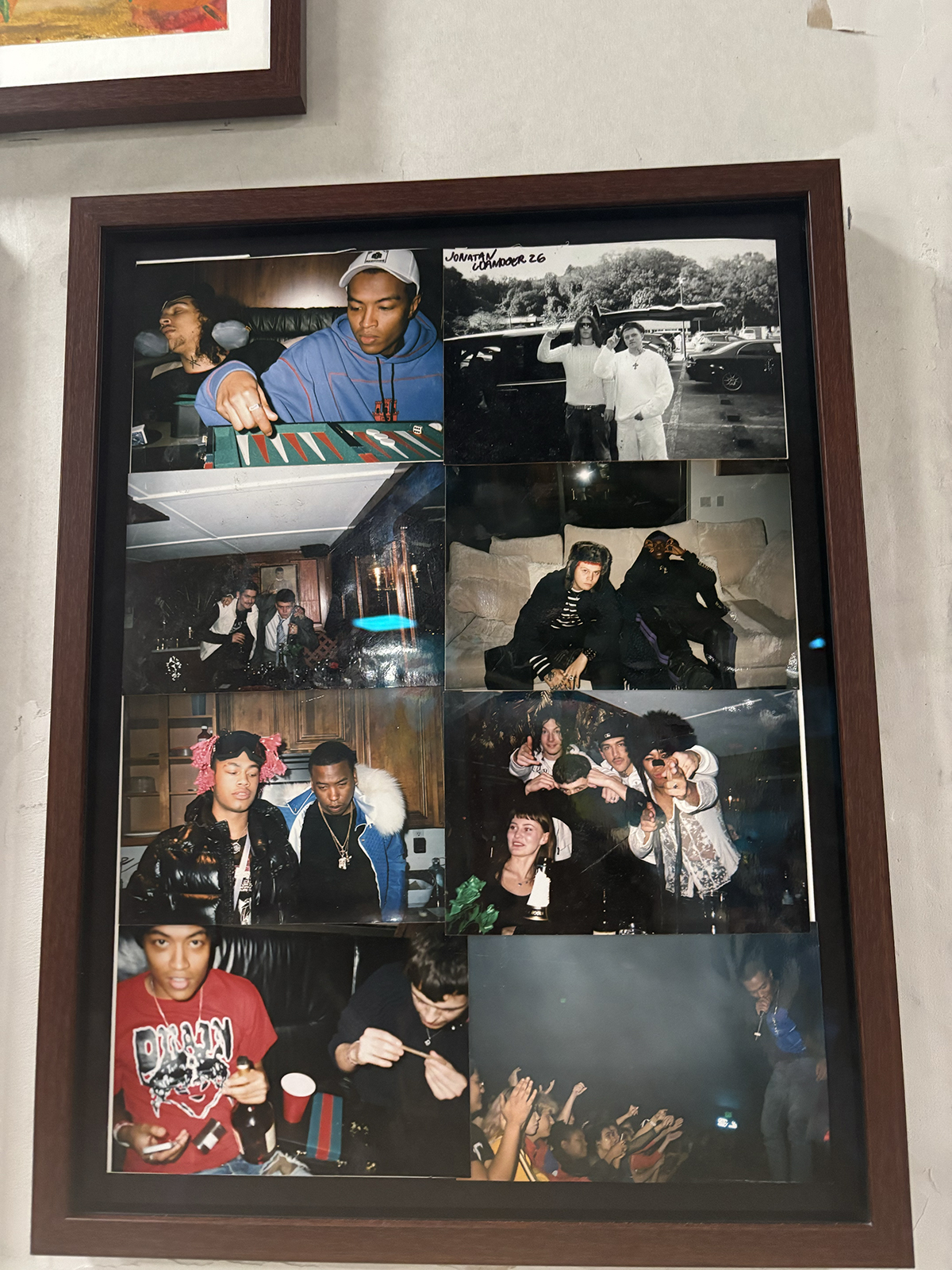
Culture doesn’t thrive on specialization – not at the level of reception, where experts are supposed to tell us what matters; not in distribution, where everything is organized around markets and target audiences; and not in production, where cultural practitioners are increasingly expected to have specialized academic credentials. If anything, culture thrives on the opposite: novels that become important to ceramicists, musicians who suddenly decide to make visual art.
That is where you can encounter a kind of quality that is not necessarily more accessible to specialists – perhaps less so. I’m referring to the moving and joyful quality of modest works and performances that make out some of the pleasure of being human, of making something together. At least that is how Jonatan Leandoer Håstad’s exhibition reaches me, as someone who exists outside Yung Lean’s target audience (if he even has one).