
How Leaving an evangelical cult and going to Burning Man with my mom healed my religious OCD
By Rue Jay Slim
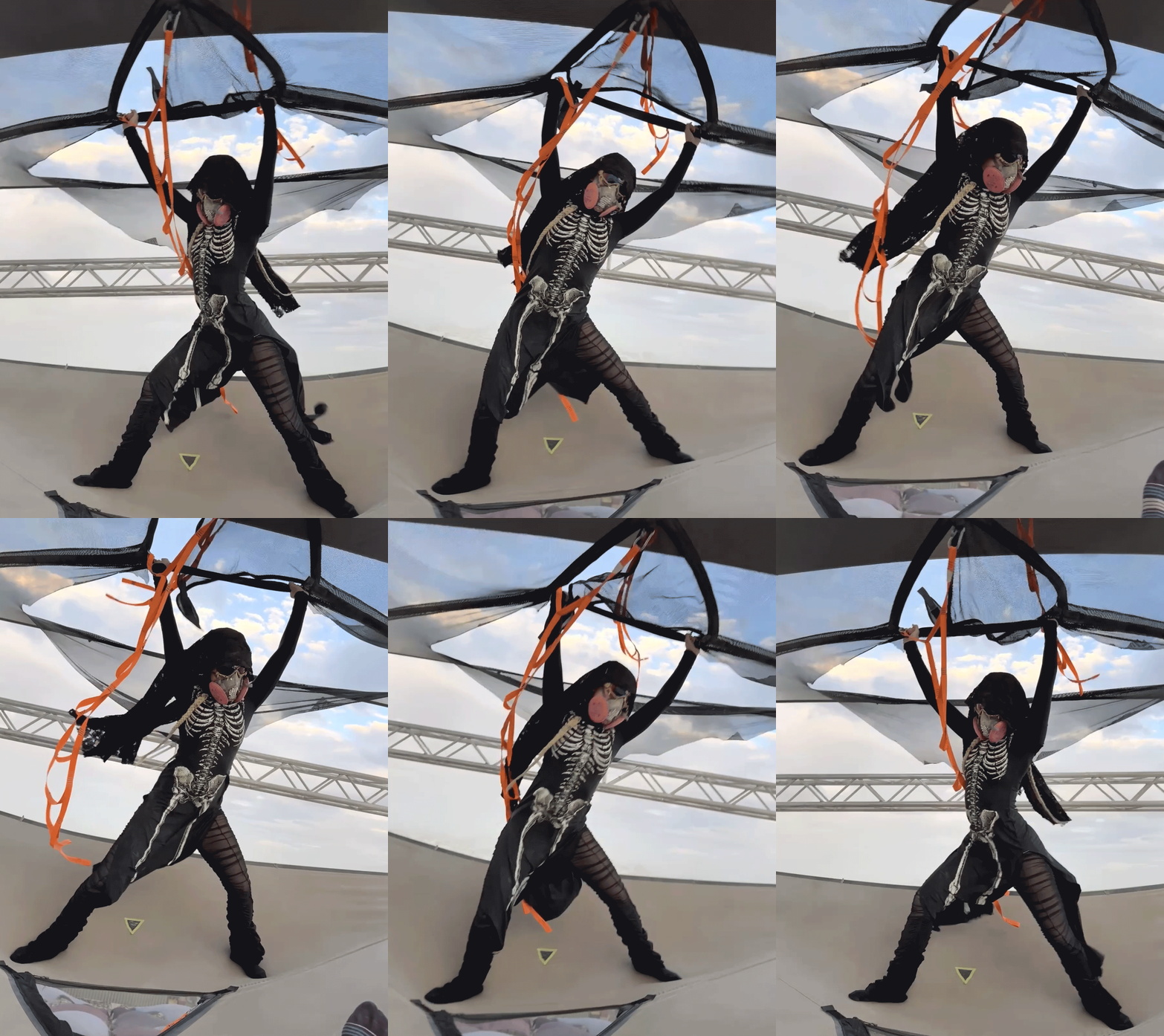
All I can see is dust. It’s my first night at Burning Man and I’m lost, alone, and tripping on shrooms in deep playa. Through my goggles the desert is a liminal Martian terrain, distant neon objects punctuating the thick darkness. I had ventured out to get my bearings in Black Rock City, the temporary encampment of roughly 70,000, when I made the amateur mistake of climbing to the top of what I thought was a sculpture (it was actually an art car). As the car speeds into the night, I begin to grasp the sheer scale of the desert. Stranded an hour’s walk from camp, I feel a rare sense of calm. I’ve spent my entire life battling my neuroses, but for the first time, I trust that I will find my way back.
For a week every year in rural Nevada, a city rises from the dust. For many first-time burners, this is their first glimpse at an intentional community; a temple to radical authenticity and a return to a primordial celebration of life. For me, an isolated, values-driven community is nothing new.
I was raised in an evangelical cult, manifesting as a close-knit group clustered in red state rural counties across the US with lax homeschooling and even more lax gun laws. Without stable jobs, health insurance, and the safety net of social services, families grew enmeshed and increasingly sequestered from society. Obama was (maybe, probably) the Antichrist of a crumbling dystopian nation, the Lord’s second coming was imminent and HSLDA (the Home School Legal Defense Association) magnets adorned our fridges for the inevitable day Child Protective Services would come knocking.
I’ve come a long way in the 15 years since my family left. Between a natural disaster that destroyed much of the land our community inhabited, the misery of rural poverty, and a major sex scandal that brought down our leader (coupled with allegations of mishandling donations wrung from impoverished cult members and a major rift between the elders on interpretations of the Book of Revelations), my parents grew disillusioned. The utopia that my parents had originally bought into – wholesome, large, homeschooled families of innocent, bright-eyed children, raised by wise, prepared, values-driven parents – revealed itself to be a postlapsarian reality. The allure: understanding a fundamental truth most of the world had forgotten and finding a chosen community of others living in accordance to that truth, is the same Burning Man offers those similarly disillusioned with the way we currently live and operate.
While I’ve since reconciled my own belief system with the one I was raised in and grown into my spirituality, I crave communities of shared values, fellow acolytes who make deliberate choices to grow closer to an ideal.
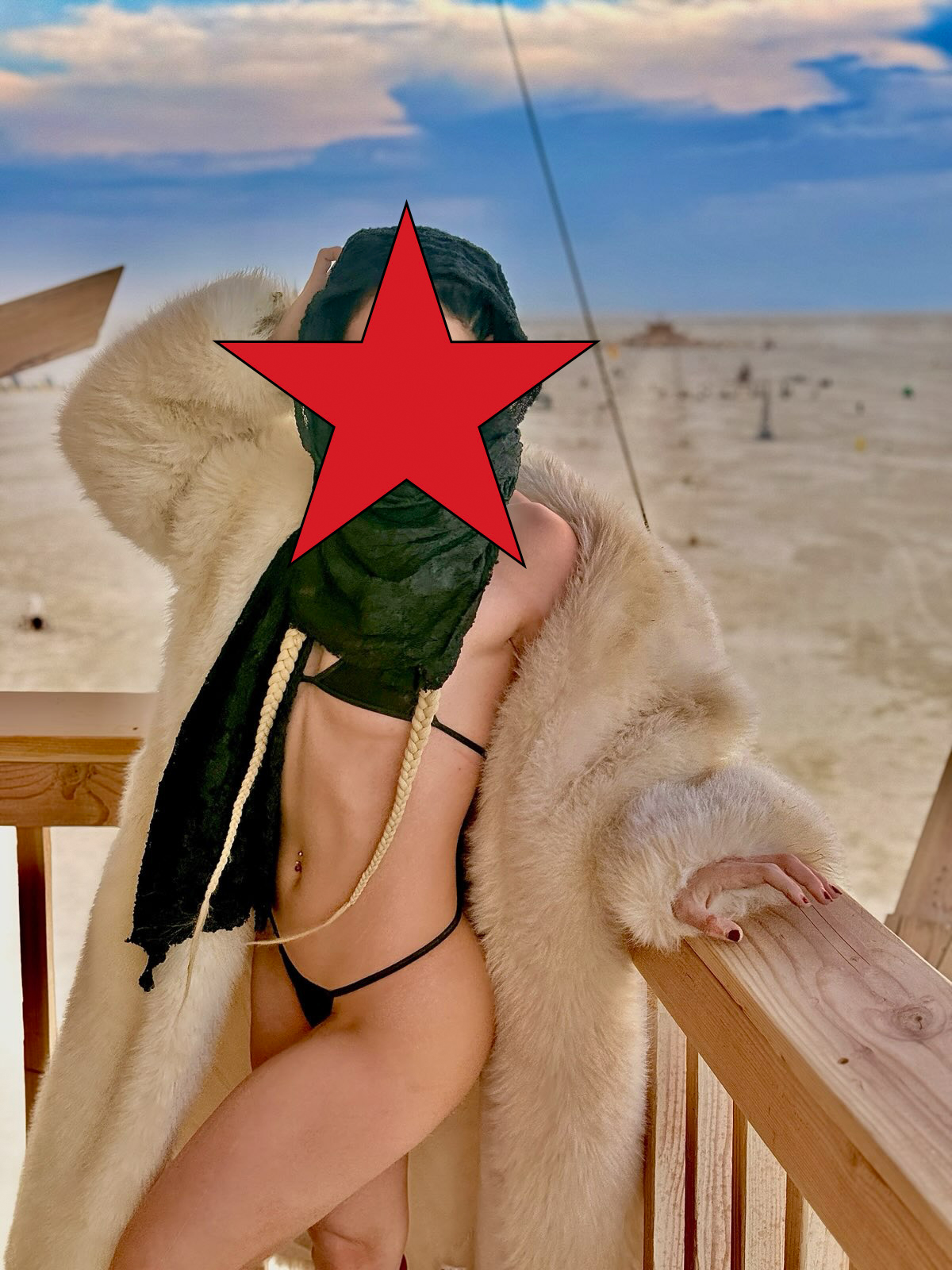
Burning Man co-founder Larry Harvey once compared Black Rock City to the ancient Greek cult Eleusinian Mysteries, especially in the way both “valued outward show and inward feeling.” Burning Man has its own ten commandments – officially, the Ten Principles – a code that promotes radical self-expression, encourages gifting, communal effort, participation, and immediacy. While longtime burners debate how the demographics have shifted in the forty years since the first man burned, the principles are still kept very much alive by the attendees. Every interaction was permeated with an openness and empathy that felt so radically different from the way I was raised, while giving my mom and I the same sense of belonging to a community of shared beliefs.
Yes, I brought my mom to Burning Man. Our relationship has shifted dramatically since the cult days, when we were both subject to my father’s will. The cult’s patriarchal doctrine equated men to the God of the home, and wives and children had to obey and submit to his will just as we did to God’s. My reality was ruled by my father, who applied the doctrine to every detail of our lives, from my education (homeschooling, which tended towards unschooling, devoid of worldly influence or academic requirements), future prospects (marriage arranged by my father then being “fruitful” and “multiplying”), behavior (meek, submissive, domestically oriented), to my clothing (modest floor-length dresses).
Growing up, I was routinely beaten for acting “disrespectful” as my dad called it – reluctant, sleepy, or anything but cheerfully obedient. I was chastised for speaking too authoritatively (pride), speaking too much (“In the multitude of words sin is not lacking,” Proverbs 10:19), and worrying too much about my appearance (vain, jezebel behavior). As I grew to realize the gravity of our constant battle against the evil of the world, my religious OCD emerged, seeping into my prayers and manifesting as tortuous thought loops and circular ruminations. The Bible taught that by thinking a thought, one had already committed the sin, (“But I tell you that anyone who looks at a woman lustfully has already committed adultery with her in his heart,” Matthew 5:28), and this, frankly, fucked me the fuck up.
I started to pray obsessively until the prayers shortened to just a word or two that I repeated in my head for hours until they felt “pure” and heartfelt. I feared communion because I knew only righteous believers could partake, and I suffered from horrible intrusive thoughts every Sunday, followed by obsessive praying and then “suddenly” gulping down the grape juice before more evil thoughts could emerge. TORTURE. I didn’t even have the words for it, because why would I even be thinking about those things? How would I ever explain that? I lived in fear that my dad would somehow find out, as he claimed he “knew my heart” and every evil thing I did. I was convinced that if he looked into my eyes he would see the sin lurking there.
When I was around eleven I started noticing the older girls and women at church. Being a lesbian became a new obsession. Ever since I could remember my dad spoke with disgust of “queers” and the depravity of Sodom and Gomorrah. These thoughts felt real in a way my intrusive religious obsessions didn’t, and I knew only my mom would understand, only she trusted that I really was trying to be good, that I wasn’t choosing to be gay and evil. I tearfully confessed to her one night when we were alone, trying to put into words how I couldn’t stop myself from imagining the women at church naked and feeling so guilty about it. “Oh baby, that’s normal, that’s just a woman thing,” she said. “When I go to the grocery store and I see a woman with nice legs, I think nice legs! She’s got nice legs! It’s normal to notice; it doesn’t mean anything.”
It took leaving the cult, working through my deeply embedded shame through experiences with women (sexposure therapy, if you will), and developing a new belief system to finally accept my bisexual identity, but what I needed to hear in that moment was that I was normal, I wasn’t evil, I was just like my mom. I always felt that she knew a truer version of me, the side I was terrified to show my dad and God. She saw me as an extension of herself, with all the complexities and strengths and good intentions, and she was the only one I could tell my ruminations to, things I begged her never to tell dad.
After our exit, cult deconstruction, and a divorce from my dad, my mom grew into herself in parallel with my own journey into womanhood. We both deliberately expanded our worlds: we’re outdoorsy and adventurous, with a myriad of creative hobbies, and close female friend groups that we’ve fostered into little communities of our own. But between my academics and work and her duties raising my younger siblings states away, we’ve only ever taken two trips together. The first was when she visited me in New York right after I moved and helped me vacate a nightmare “co-living” safety situation with a relapsing meth addict. Turning 30, my Saturn return, and looming mortality prompted me to propose a second trip together. I reflected on how differently our lives looked at the same age; the things we always wanted to do but never did. “What if we go to Burning Man…” I texted my mom in April. “YES!!” she replied immediately.
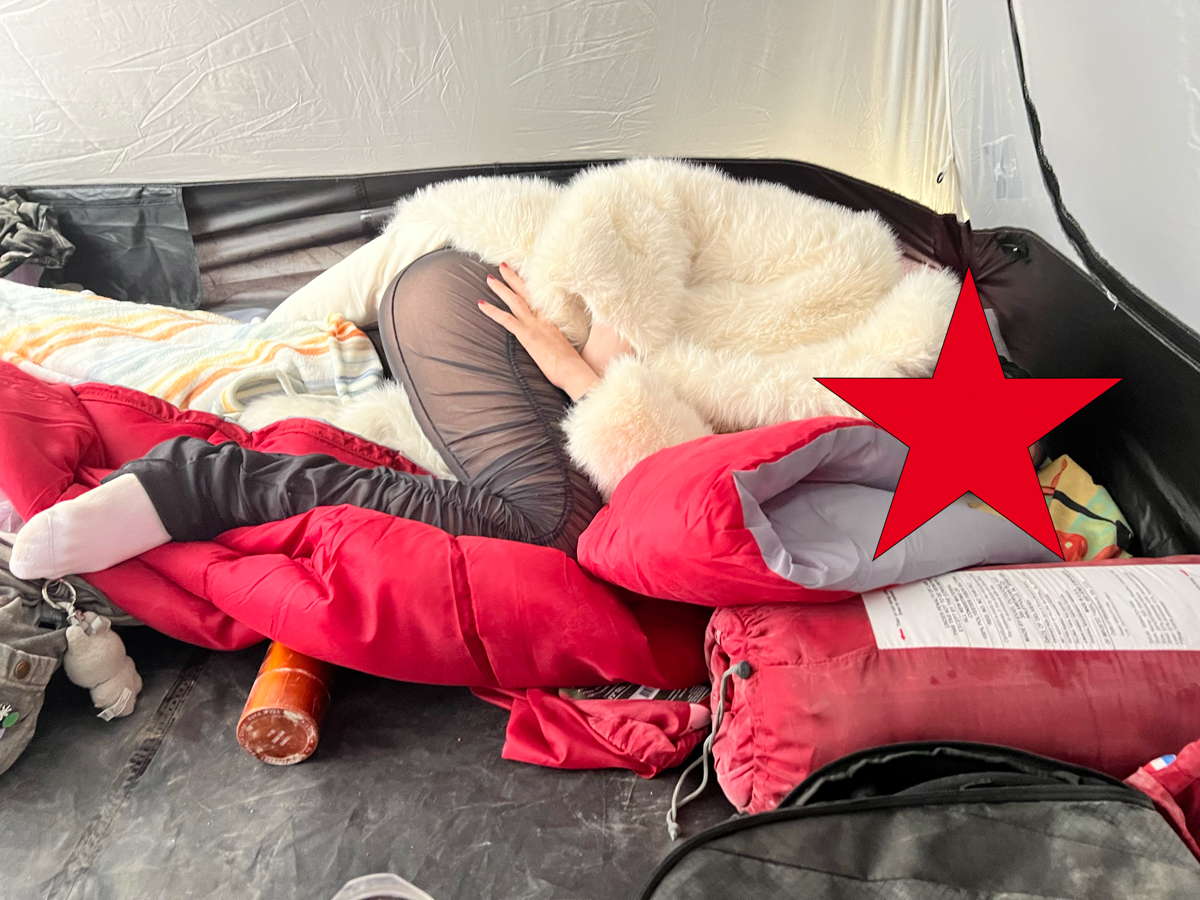
Burning Man is the longest amount of time we ever spent together, just the two of us. We felt almost like sisters, both unraveling our new identities, trusting each other to experience our own burns. My mom went to bed early and explored the daytime city, working out at a nude gym at a gay camp nearby and body painting intricate floral and psychedelic designs on anyone she could lure in. We met up at Foamadelic, a naked dance party with foam and water (a chance to wash off the playa dust), explored physics-defying art installations in shipping containers, and worked a greeter shift during a complete white-out dust storm. I stayed out all night, dancing in flaming pirate ships and UV-lit dungeons, finding myself entangled with strangers, letting the playa absorb me w(hole) and spit me back out.
I would stumble back as she got up for breakfast, always trying to make me something, even if I insisted I was just going to sleep. We made a plan to watch the sunrise choir at the temple but were unable to find each other.She had just woken up and was waiting for me in the crowd, but I was tripping on 2CB and doing laps around the outside, trying to spot her through the glare of the sunrise. After the choir ended, I paused to look up, the sun hovering right above me, painting the sky in Van Gogh shades of orange and lavender. I realized that wherever my mom was (literally in the crowd I had just walked through), she was watching the sunrise too (literally right next to me somewhere), and my friend (also on a massive dose of 2CB) and I gave up on finding her and sat in the dust, sparking up a joint. I took the last picture in my disposable camera of the sunrise silhouetting our legs. I’ll show her later, I thought, knowing she was probably taking pictures to show me too.
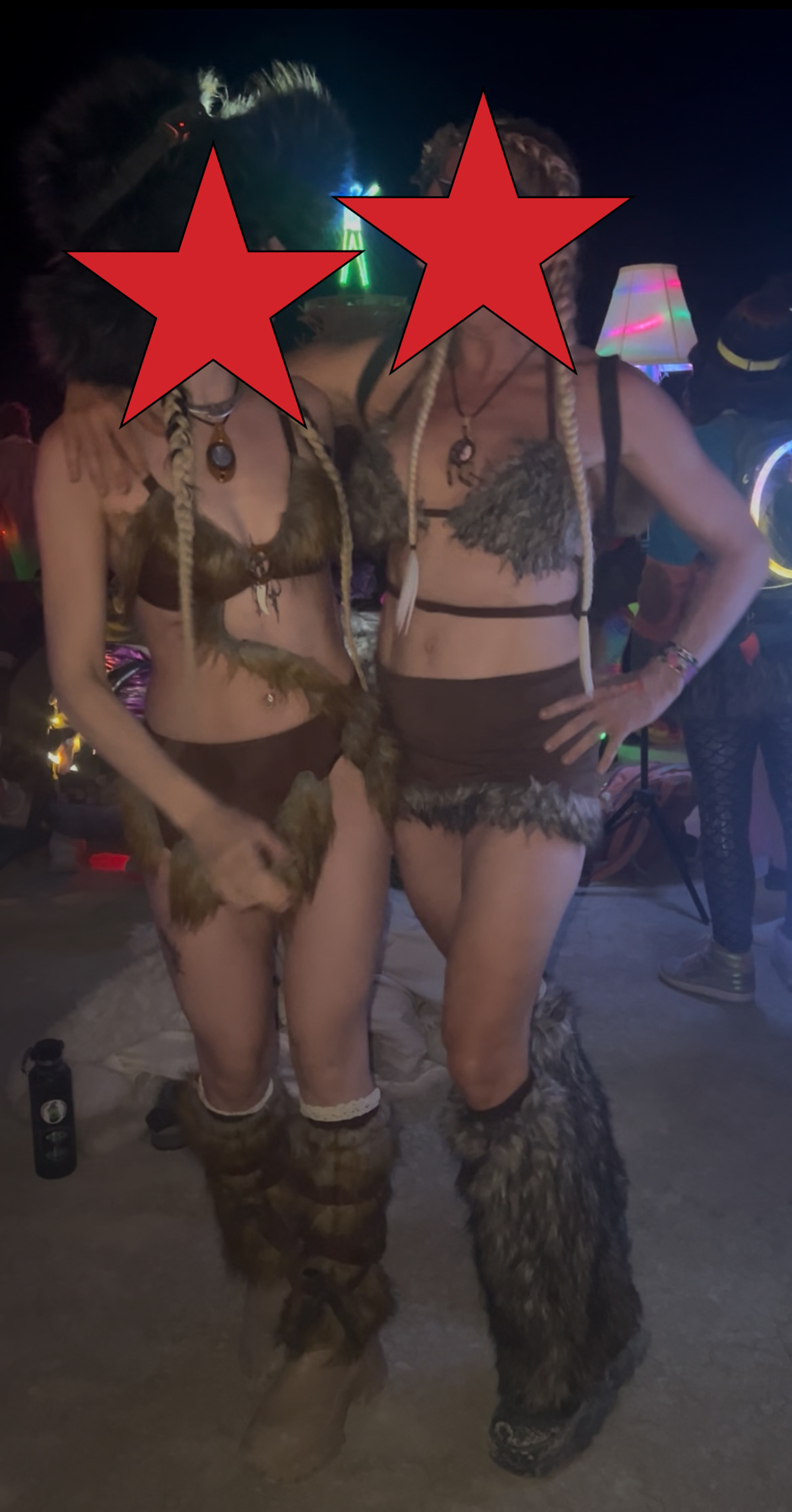
In the 15 years since I left, I’ve learned there’s no such thing as fully healing – there’s only growing in new directions, integrating and reintegrating and building upon what came before. While exchanging one cult for another seems paradoxical, growing together in a community is as much a choice as growing apart from one. In choosing to be together in this desert, we got a little closer to the people we are becoming.
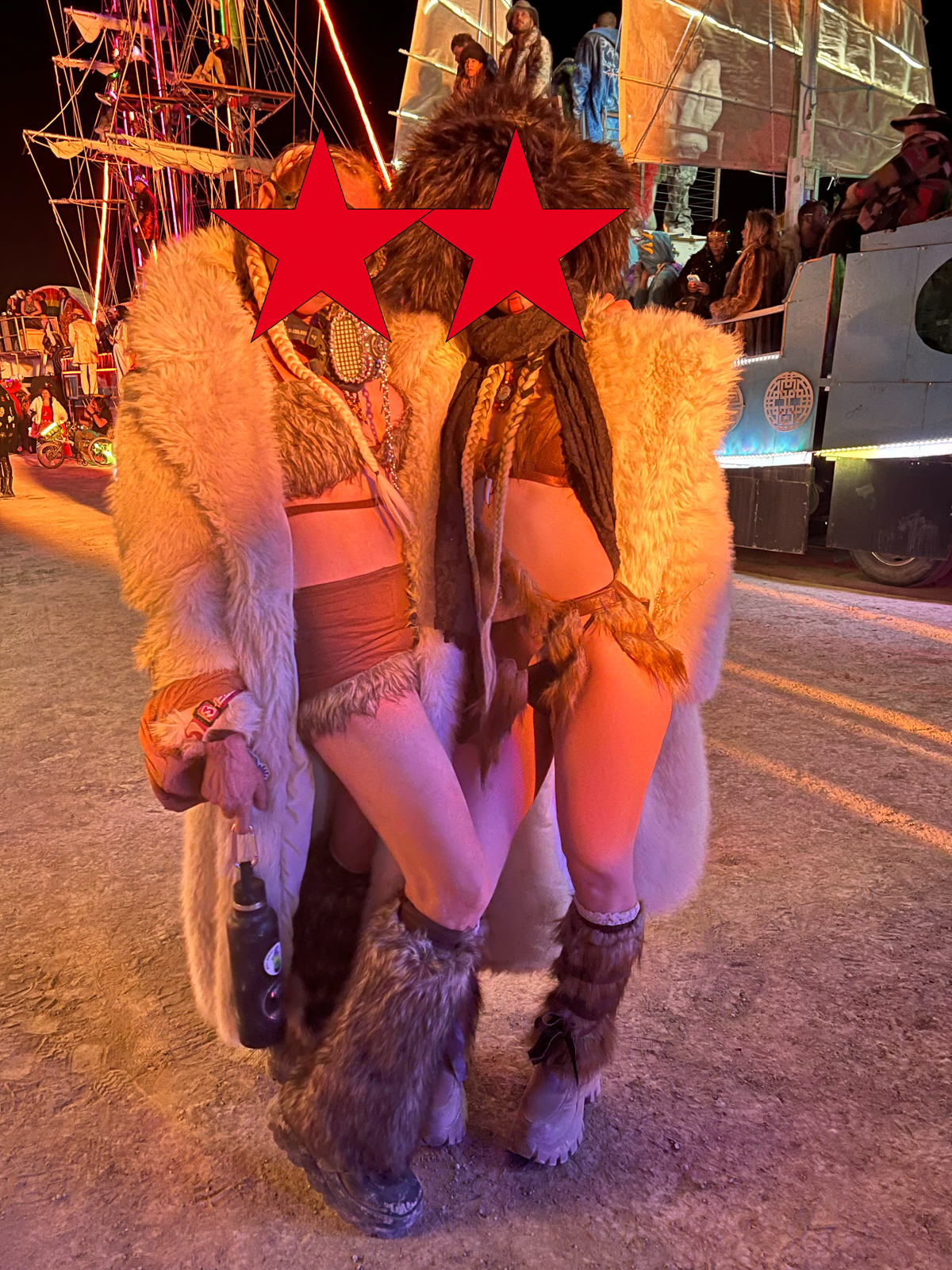
The gravity of our experience hit me during the temple burn. The last night of Burning Man is a somber ceremony, potent with the energy of the past week, as a wooden shrine filled with photos and memorabilia of lost loved ones illuminates the desert. As the sparks rose behind us, I told my mom in sobs how Burning Man had temporarily cured my OCD, that being so present and so loved and sharing in the intensity had completely removed me from my obsessions and compulsions, thrust me into a headspace so free of the guilt of my daily responsibilities and ruminations that I didn’t know how I could return to normal life. “I need to change some things about my life,” I said through tears. “I don’t know how, but I need to be more like this… I feel like this was me, this week, you know?” She held me as the flames warmed us inside our fur coats, two women who, by a few lucky breaks and a thousand hard choices, ended up here, together, a cult away.